



Yaoda Motor Showcases Stator Winding and Insulation Manufacturing for IE3, IE4 and IE5 Motors
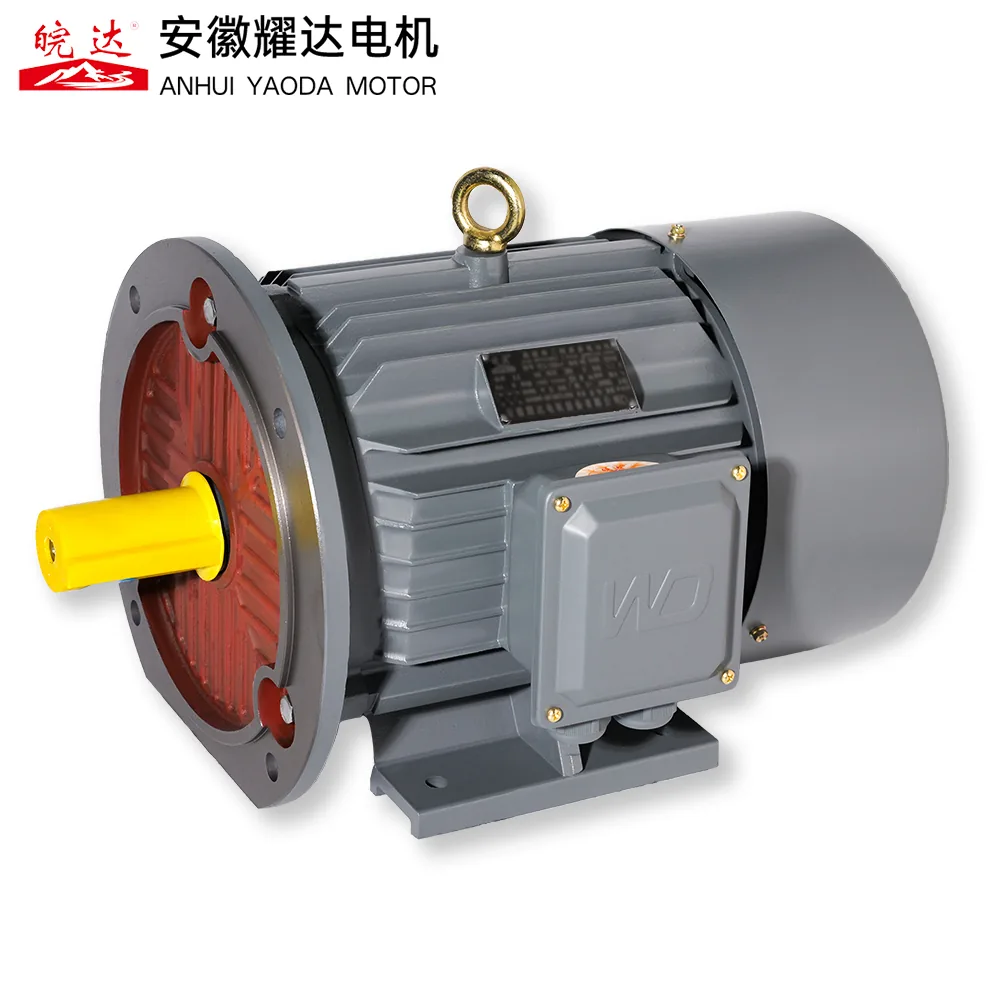
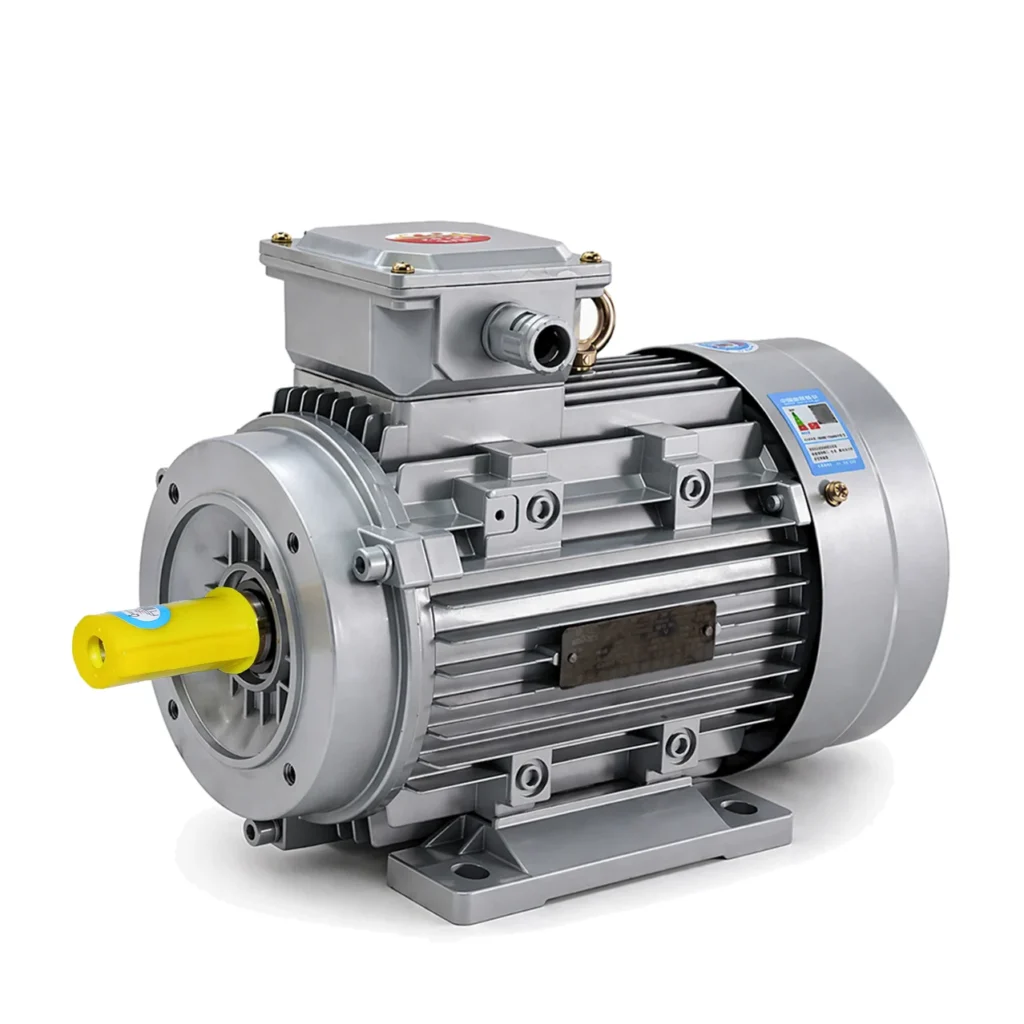
ANHUI, CHINA — Anhui Yaoda Motor Co., Ltd. is highlighting its stator winding manufacturing and insulation processing capabilities for industrial electric motors, with a particular focus on the YE3, YE4 and YE5 high-efficiency three-phase induction motor series.
At our manufacturing facility in Chuzhou, Anhui Province, automated winding equipment, coil insertion operations, insulation treatment and electrical inspection form an important part of motor production. These processes support the manufacture of standard industrial motors, higher-efficiency designs and motors intended for variable-frequency operation.
Our manufacturing operations bring winding preparation, stator assembly, insulation processing and subsequent testing into a coordinated production workflow. The objective is to maintain consistent electrical characteristics across different motor specifications and repeat production orders.
Automated Stator Winding at Yaoda Motor
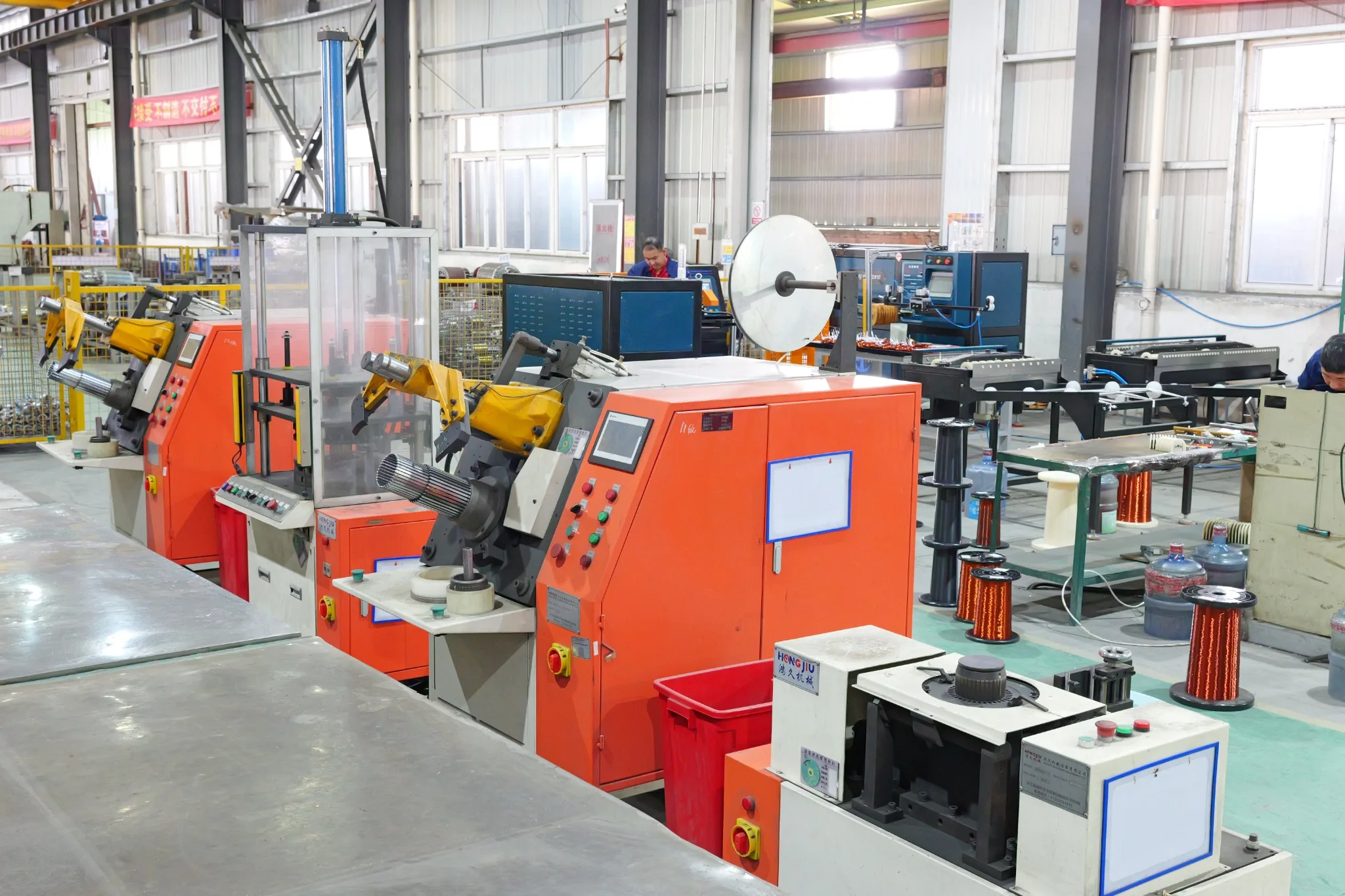
Our stator manufacturing workshop uses automated winding equipment alongside coil insertion and manual finishing operations. The production sequence covers coil winding, insertion into the stator slots, slot wedge installation, winding-end shaping and electrical connections.
Each operation has a direct influence on the condition of the completed stator. Winding dimensions must be suitable for the selected stator core, conductors must be inserted without unnecessary insulation damage, and winding ends must be arranged to maintain the required clearance for subsequent assembly.
Automated equipment supports repeatability during coil preparation, while production personnel complete insertion, connection and finishing work according to the motor configuration.
Our company development records also document the introduction of automated winding machines and upgraded production workstations in 2025. These improvements form part of the manufacturing capabilities currently used to support motor production.
Coil Insertion and Winding Insulation Processing
After winding preparation, the coils proceed through the insertion and finishing stages. Slot insulation, conductor positioning, slot wedges, winding-end shaping and electrical connections must be completed before the stator is ready for the applicable insulation treatment.
These operations are carried out within our wire embedding workshop, where automated equipment and production personnel work together on stators of different frame sizes and winding configurations.
The completed winding must retain its insulation integrity during handling, impregnation, assembly and subsequent motor operation. Particular attention is therefore given to conductor placement, winding-end condition and the quality of electrical connections.

Insulation Treatment and VPI Manufacturing Capability
Insulation processing is another established part of our stator manufacturing operations. Our published factory capabilities include vacuum pressure impregnation (VPI), which is used to improve the impregnation of winding insulation systems.
For motor configurations using VPI treatment, the process helps impregnating resin penetrate suitable winding spaces and provides additional mechanical support to the insulated conductors after curing. This contributes to resistance against vibration, moisture and thermal stresses encountered during operation.
The insulation process is selected according to the motor design and manufacturing requirements. VPI is part of our available manufacturing capability, rather than a statement that every motor model receives identical treatment.
Following the applicable insulation processing, stators proceed through electrical inspection before being released for further assembly.
Supporting YE3, YE4 and YE5 High-Efficiency Motor Production
Our winding and insulation manufacturing operations support three major high-efficiency induction motor families: YE3, YE4 and YE5.
YE3 Series — IE3 Induction Motors
The YE3 IE3 induction motor series covers H80–355 frame sizes and is designed for industrial applications including pumps, fans, compressors, conveyors and general machinery.
For this series, repeatable coil preparation, reliable insulation placement and consistent electrical connections are important production requirements, particularly when manufacturing repeated OEM orders with approved electrical specifications.
YE4 Series — IE4 Three-Phase Induction Motors
The YE4 IE4 three-phase induction motor series introduces more demanding efficiency requirements. Stator winding manufacture must follow the approved electrical design, including conductor specifications, winding arrangement and insulation configuration.
Winding consistency contributes to the control of electrical losses, although the finished motor's efficiency also depends on the magnetic circuit, rotor design, mechanical losses and overall motor construction.
YE5 Series — IE5 High-Efficiency Induction Motors
Our YE5 IE5 induction motor series extends the product range to a higher efficiency classification.
Manufacturing these motors requires careful execution of the specified winding arrangement, conductor insulation and electrical connections. The insulation system must also remain compatible with the motor's thermal design and intended operating conditions.
Across these three product families, automated winding and controlled insulation processing help translate approved motor designs into repeatable production operations.
Winding and Insulation Requirements for Variable-Frequency Motors
Our stator manufacturing capability also supports the YVF2 and YVF3 variable-frequency motor ranges.
The published YVF2 model table lists H200–355 frames rated 18.5–315 kW. Other YVF2 frame sizes and ratings require model-specific confirmation. The YVF3 series extends variable-frequency motor production to H355–450 frames and approximately 132–900 kW.
These motors operate with frequency converters and therefore require attention to the electrical stresses associated with inverter output waveforms, particularly voltage rise time, repetitive voltage peaks and winding insulation coordination.
For variable-frequency applications, the motor specification must address the required insulation system, operating frequency range and cooling arrangement. Large-frame motors introduce additional considerations relating to winding dimensions, electrical connections and thermal management.
Our YVF3 high-power variable-frequency motor series is designed for adjustable-speed industrial machinery, including applications in metallurgy, cement production, chemical processing and other heavy industrial sectors.
Winding manufacture and insulation processing are coordinated with the approved electrical specification rather than treated as identical operations for every motor series.
Electrical Inspection Before Motor Assembly
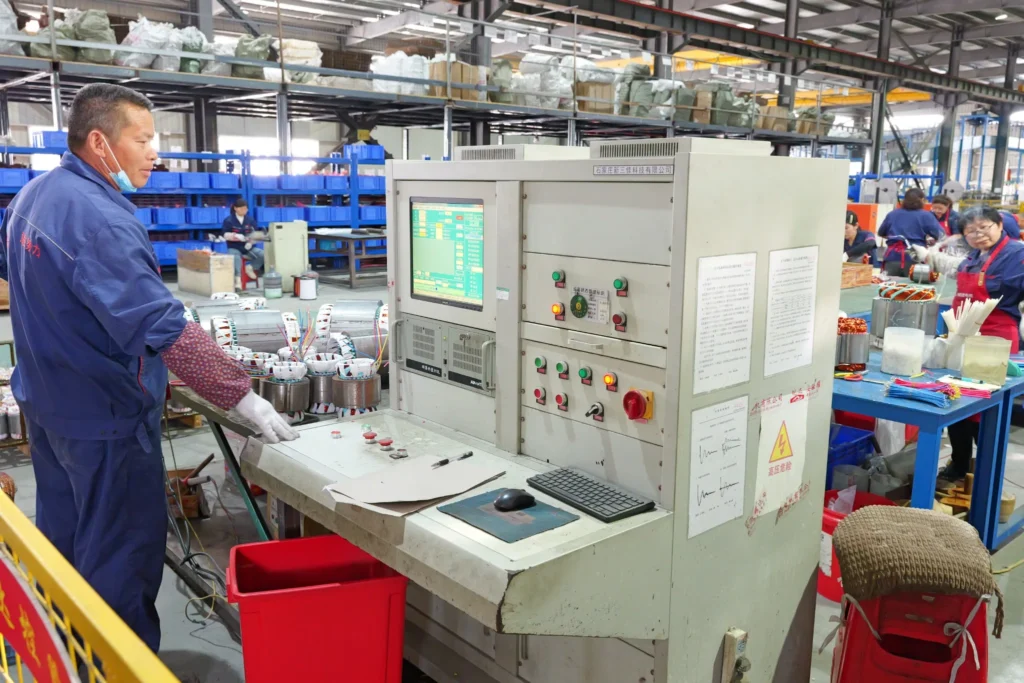
Electrical inspection connects the stator manufacturing workshop with the subsequent motor assembly and testing operations.
Our published quality-control procedures include insulation-related checks, electrical performance inspection and finished-motor testing. Winding resistance and insulation resistance are among the electrical characteristics addressed during motor quality verification.
After stator preparation, the manufacturing process continues through rotor installation, bearing and end-cover assembly, cooling-system installation and final motor assembly.
Completed motors undergo applicable electrical and mechanical performance checks, including no-load and load testing, insulation verification, vibration, noise and efficiency assessment. The inspection requirements are matched to the relevant product and approved specification.

Manufacturing Support for International OEM Motor Projects
Our stator winding and insulation operations are integrated with motor machining, assembly, testing and export preparation. This manufacturing structure supports both standard motor production and orders requiring specific electrical or mechanical configurations.
For OEM projects, the approved motor specification may include voltage, frequency, pole count, frame size, efficiency class, mounting arrangement, insulation requirements and operating conditions. These details are reviewed as part of the production requirements for the selected motor series.
By maintaining in-house winding, insulation processing and testing capabilities, Yaoda Motor supports the manufacture of industrial motors for equipment manufacturers, distributors and engineering projects in international markets.
For technical specifications, motor selection or OEM production enquiries, please contact Yaoda Motor with your required motor series, electrical parameters, application details and order quantity.