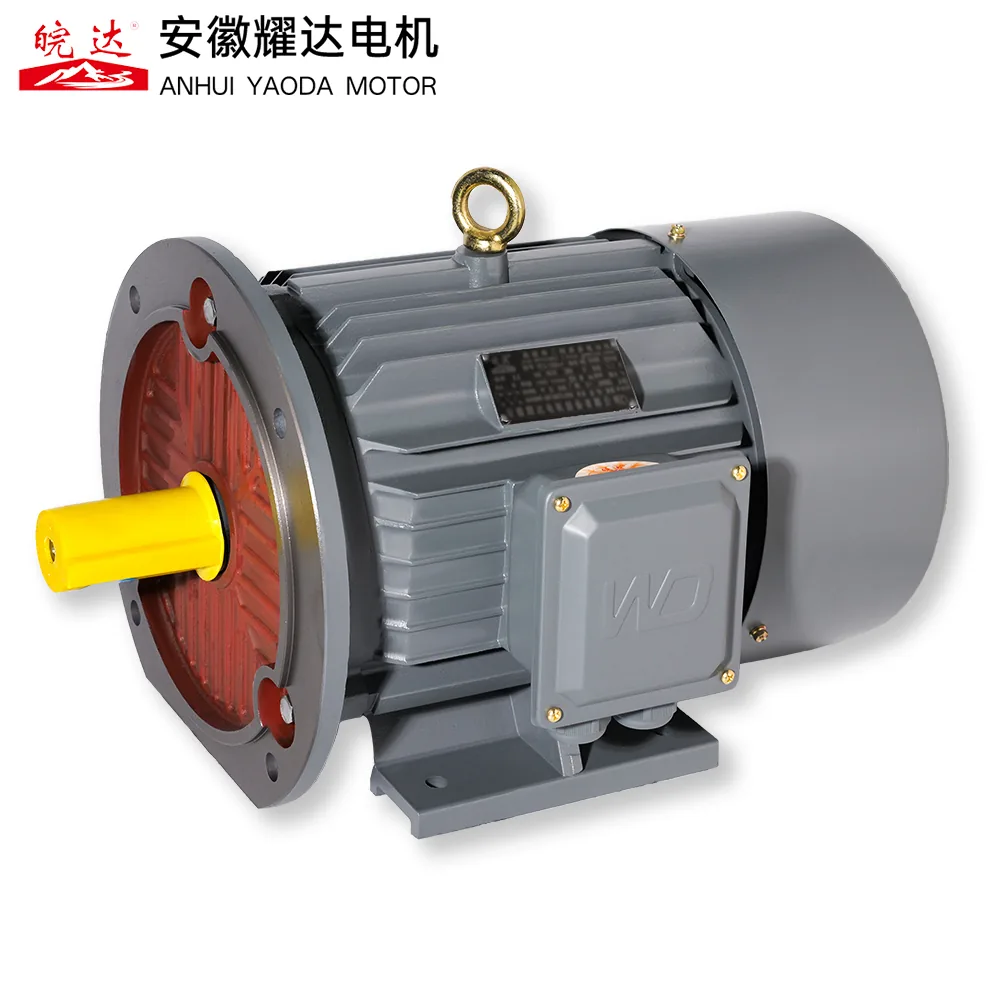




Voltage compliance: If the order specifies 415 V, a 400 V-only motor does not meet the requirement.
Common three-phase supply voltages include 380 V in China, 400/415 V in Europe and the United Kingdom, and 480 V distribution with 460 V motors in North America. Select the winding from the site’s measured voltage, frequency and connection. This guide turns three-phase motor voltage by country information into that practical comparison.
Before quoting, ask for the measured line voltage, frequency, nameplate photo and driven machine. Those four items show whether the site really needs 400, 415 or 460 V.
Check the Site Voltage First
Ask for these four readings before selecting a motor range:
- Distribution: What three-phase voltage does the utility provide to the site?
- Plant bus: What is actually available at the motor control panel?
- Terminal reading: What voltage appears at the motor terminals while the plant is operating?
- Nameplate connection: Which winding arrangement does the existing motor show?
These values can diverge sharply. A private transformer may keep a site at 400 V even when the public network is described as 415 V. Long cable runs can alter the voltage reaching the motor. A machine imported from another region may carry a winding that does not match the building’s nominal supply.
Three-Phase Motor Voltages by Market
Use this table for first screening only. Plant voltage and connection still need to be measured on site.
| Market | Supply pattern to expect | Nameplate marking often seen | Frequency | What the distributor should verify |
|---|---|---|---|---|
| European Union | 400 V or 415 V; some large plants use 690 V | 230/400 V, 400/690 V or 415 V | 50 Hz | Connection, efficiency class, CE documentation and label language |
| United Kingdom and Ireland | 400 V and 415 V | 230/400 V or 415 V | 50 Hz | Measured bus voltage and compatibility with existing starters and controls |
| China | 380 V; selected 400/690 V high-power systems | 220/380 V or 400/690 V | 50 Hz | Winding links, terminal arrangement and export marking |
| India and South Asia | 415 V, alongside 380 V and 400 V installations | 415 V, 230/400 V or 220/380 V | 50 Hz | Site voltage, ambient temperature, load margin and protection degree |
| Middle East | 380 V, 400 V and 415 V | 400 V, 415 V or 230/400 V | 50 Hz | Heat, dust, enclosure, project specification and document pack |
| North America | 208 V, 240 V, 480 V and selected 600 V systems | 230/460 V; 200/230/460/575 V variants | 60 Hz | Motor rated voltage versus 480 V supply, approval needs and connection diagram |
| Japan | 200 V and 400 V | 200/400 V or application-specific | 50 Hz or 60 Hz by region | Regional frequency and machine speed |
| Australia and New Zealand | 400 V and 415 V | 415 V or 230/400 V | 50 Hz | RCM requirement, environment and installation method |
| Latin America | 220 V, 380 V, 440 V and 460 V | 220/380 V, 440 V or 460 V | Usually 60 Hz, with exceptions | Country, site conditions, certification and document language |
↔ Swipe or drag horizontally to view the full table.
380 V, 400 V, 415 V and 460 V: What Changes
Most quotation mistakes involve 380, 400, 415 or 460 V. The numbers are close, but the winding, frequency and connection requirements may not be interchangeable.
- 380 V: common in China and parts of Asia, but a distributor should still verify whether the site operates closer to 380 V or 400 V.
- 400 V: common across Europe and modern industrial systems; the nameplate may show 400 V directly or a 230/400 V delta/star arrangement.
- 415 V: used in India, the United Kingdom and several older networks; a 400 V label is not automatic approval for a 415 V order.
- 460 V: frequently paired with 480 V North American distribution; frequency, service factor, approval and connection all require review.
Similar treatment applies to 200, 220, 440, 575 and 690 V products. A distributor’s internal catalogue should show the exact rated voltage and connection—not only a broad market label.
What 230/400 V and 400/690 V Mean
A slash between two voltages describes a connection relationship. It does not mean that every customer can use either figure without changing terminal links or controls.
| Nameplate marking | Connection relationship | Distributor consideration |
|---|---|---|
| 230/400 V Δ/Y | 230 V three-phase in delta; 400 V three-phase in star. | Confirm the terminal-link diagram and starter arrangement for the destination market. |
| 400/690 V Δ/Y | 400 V three-phase in delta; 690 V three-phase in star. | Check cable insulation and starter ratings as well as the motor connection. |
| 230/460 V | A common low/high arrangement for 60 Hz equipment. | Verify the winding diagram and market-access requirements before stocking. |
↔ Swipe or drag horizontally to view the full table.
The motor may turn during an incorrect connection test and still overheat, lose torque or fail under the real load. Testing rotation alone is not acceptance evidence.
50 Hz vs 60 Hz: What Changes for the Driven Machine
A change from 50 Hz to 60 Hz changes the magnetic field speed. With four poles, the ideal synchronous speed moves from roughly 1,500 r/min to 1,800 r/min before slip. The electrical nameplate may allow the new frequency while the driven machinery still presents a problem.
- Pumps and fans can demand substantially more power as speed rises.
- A gearbox, coupling or brake may have a lower permitted maximum speed.
- Acceleration time, starting current and overload protection can shift with the load.
- Variable-frequency operation depends on insulation, cooling and a reviewed speed range.
Keep fixed-speed 50 Hz, 60 Hz and VFD-compatible motors in separate stock groups. A 50 Hz rating should not be treated as a direct replacement for a 60 Hz machine.
Which Voltage Variants Should a Distributor Stock?
Stock by repeat demand, not by geography. Start with these groups:
- Fast-moving 50 Hz ratings for general industrial replacement.
- The dominant local voltage and connection in the primary sales market.
- Selected 60 Hz units for imported machinery and North American equipment.
- A compatible variable-speed family, such as the YVF2 variable frequency motor, where speed control creates repeat demand.
- Special voltage, high-power or hazardous-area motors built against confirmed projects.
Put voltage, frequency, connection, power, poles, frame, mounting, efficiency class and certification in each stock description. A kW rating alone is not enough to identify a replacement.
What to Include in the RFQ
Ask the distributor for these eight items:
- Destination country, city and whether this is a new or retrofit installation.
- All measured line voltages and supply frequency at the motor terminals.
- Nameplate photo, including wiring diagram and terminal-link position.
- Power, poles, speed, duty, driven machine and starting method.
- Frame, mounting, shaft and flange dimensions.
- Environment, enclosure, cooling and hazardous-area classification.
- Efficiency class, required certification, label language and technical documents.
- Annual quantity, first-order quantity and delivery expectation.
Write the approved voltage, connection, frame and mounting into the order. The next batch can then be checked against the same specification.
For routine fixed-speed projects, compare the YE3 high-efficiency motor range with the YE4 ultra-high-efficiency range. If a customer has already operated a motor on an improvised single-phase supply, open the single-phase failure investigation guide before ordering replacement stock.
From Market Question to Production Order
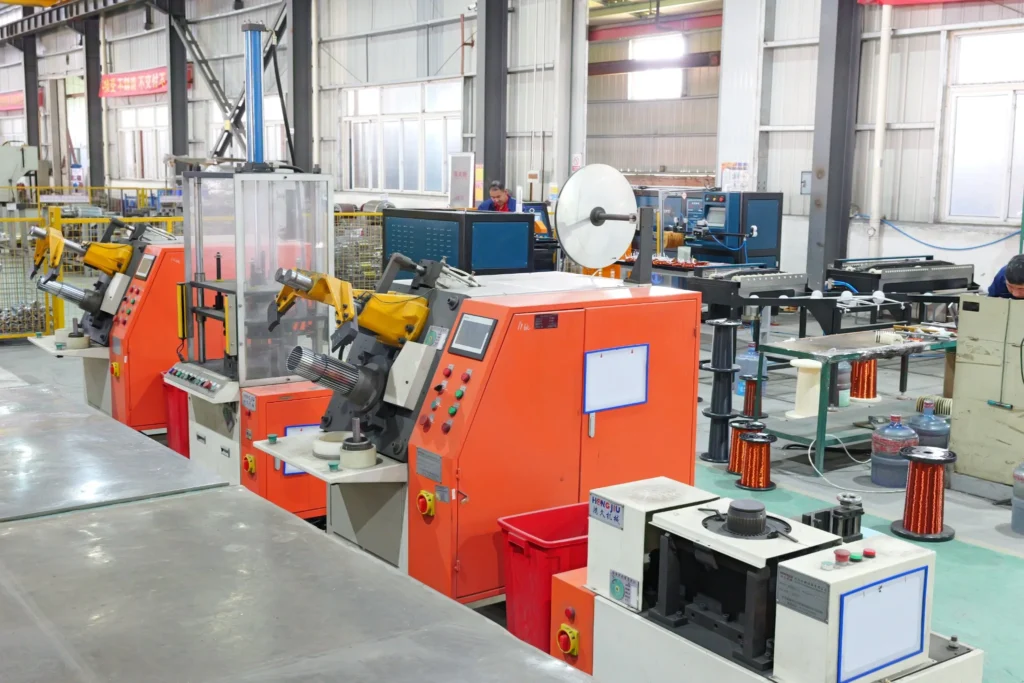
Yaoda checks distributor projects by winding, terminal arrangement, nameplate, mechanical interface and required test record. This catches voltage and mounting errors before quotation.
Start with the site voltage and target motor frame. If either needs a dedicated winding or additional market-access document, we mark it before quoting instead of treating the order as standard stock.
Opening a New Export Market?
Send Yaoda the destination, measured voltage, frequency, driven machine, quantity and required documents. The factory team can review the winding and product range before quotation.