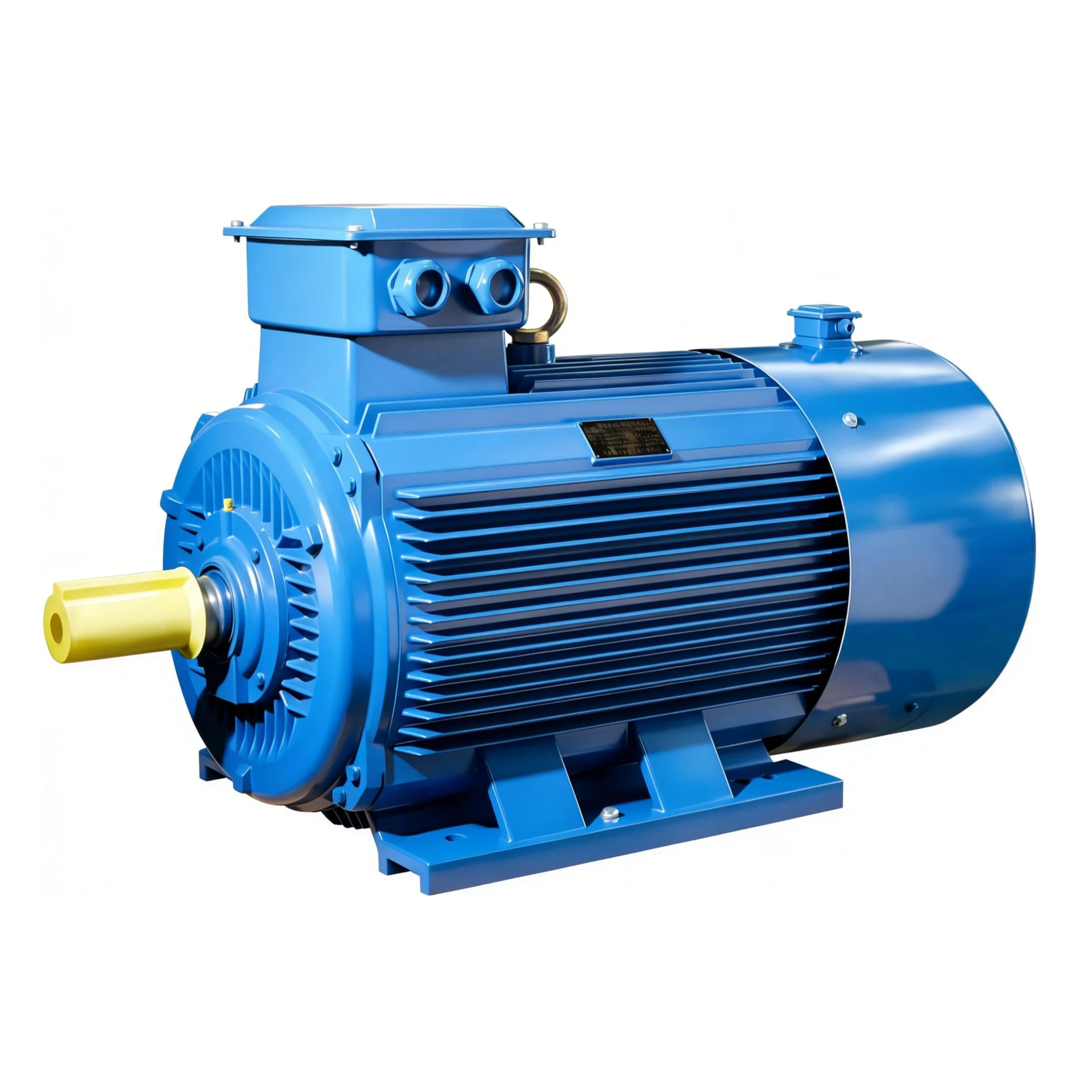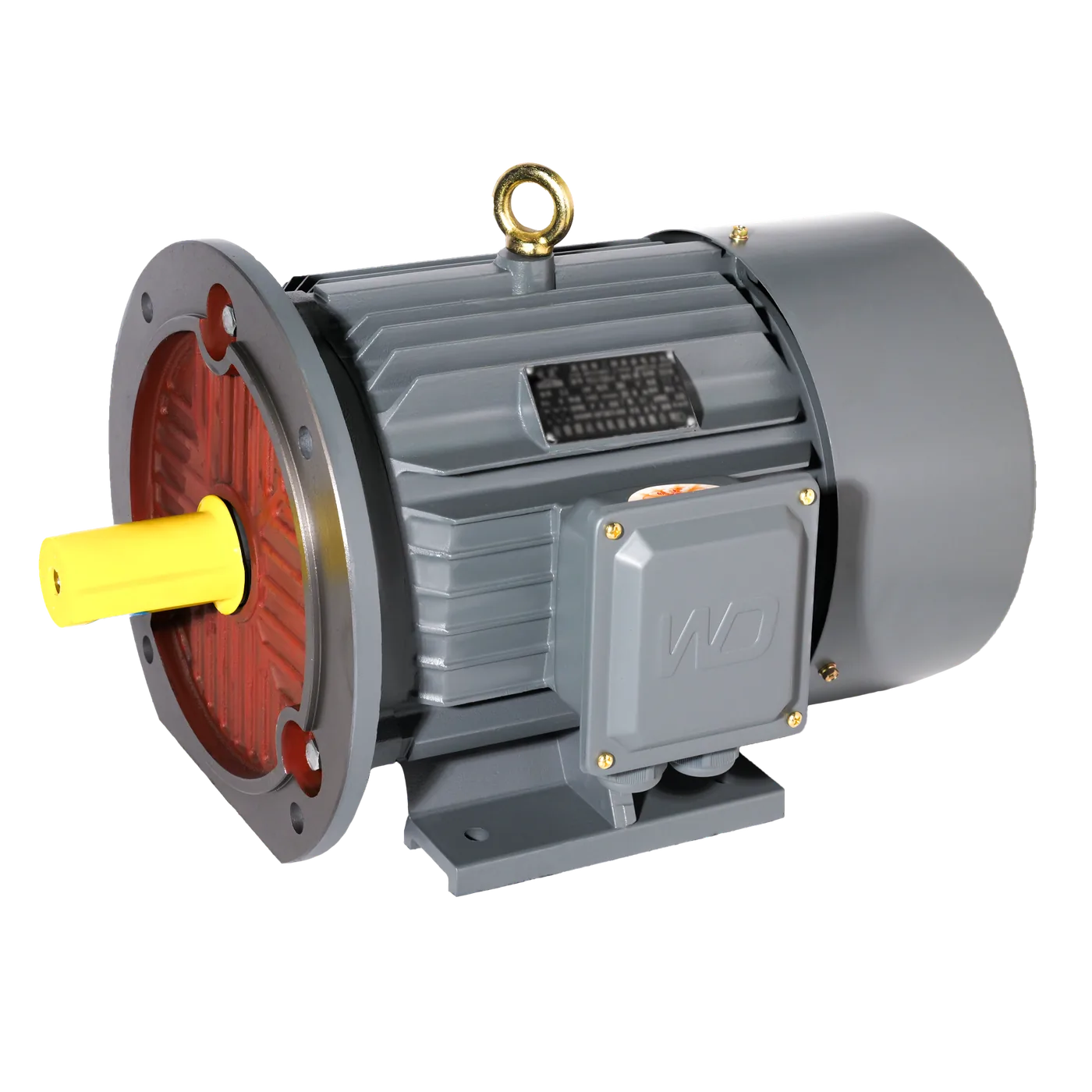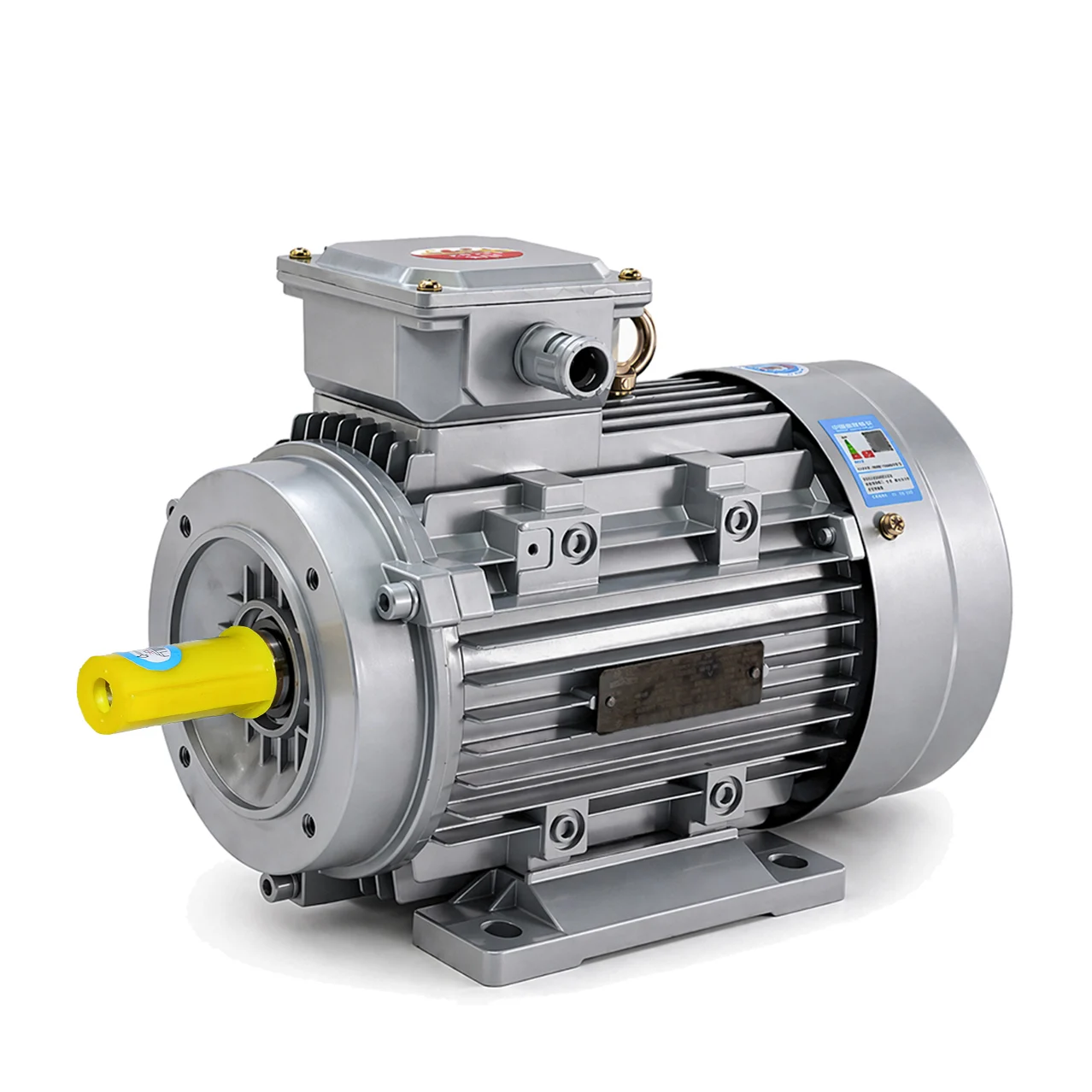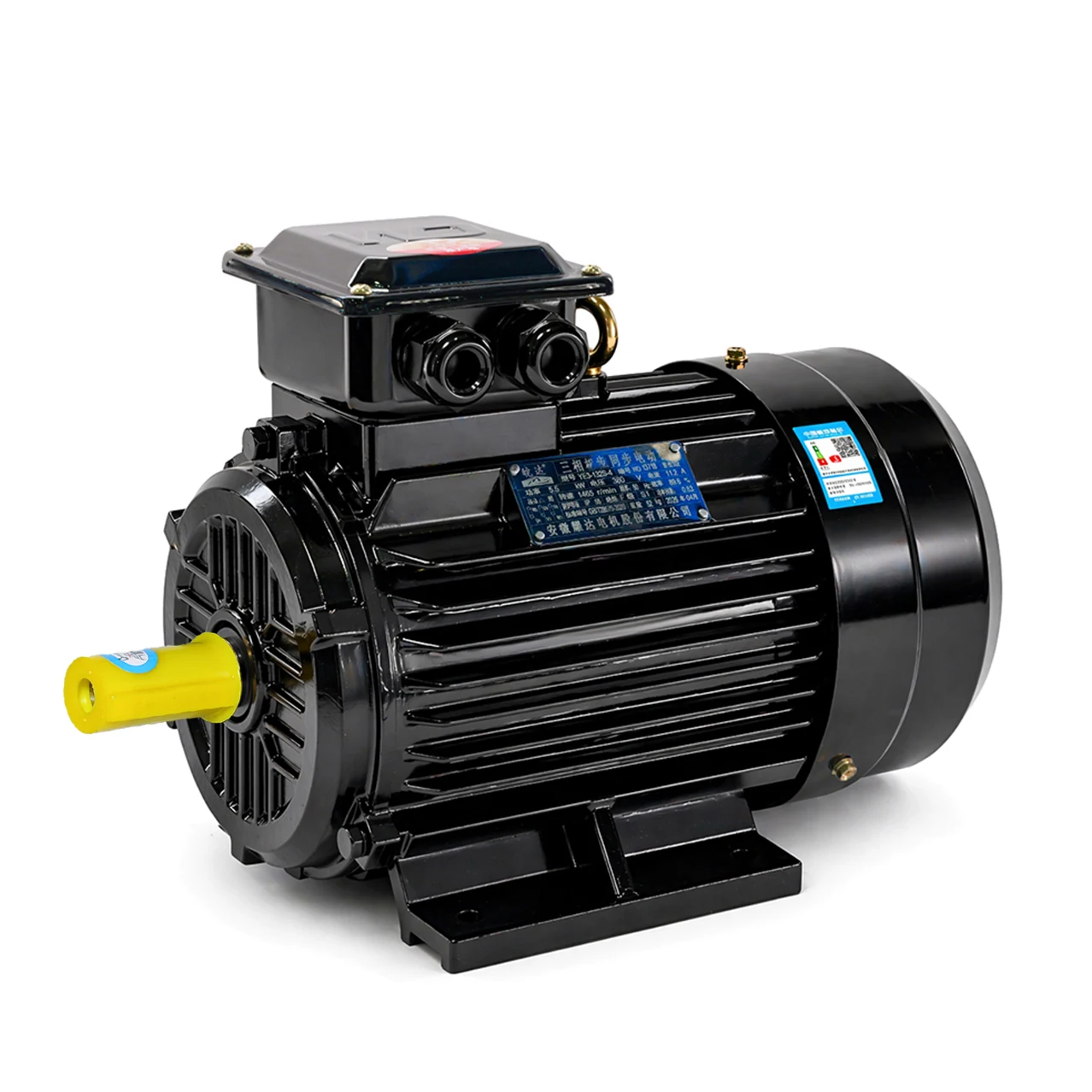




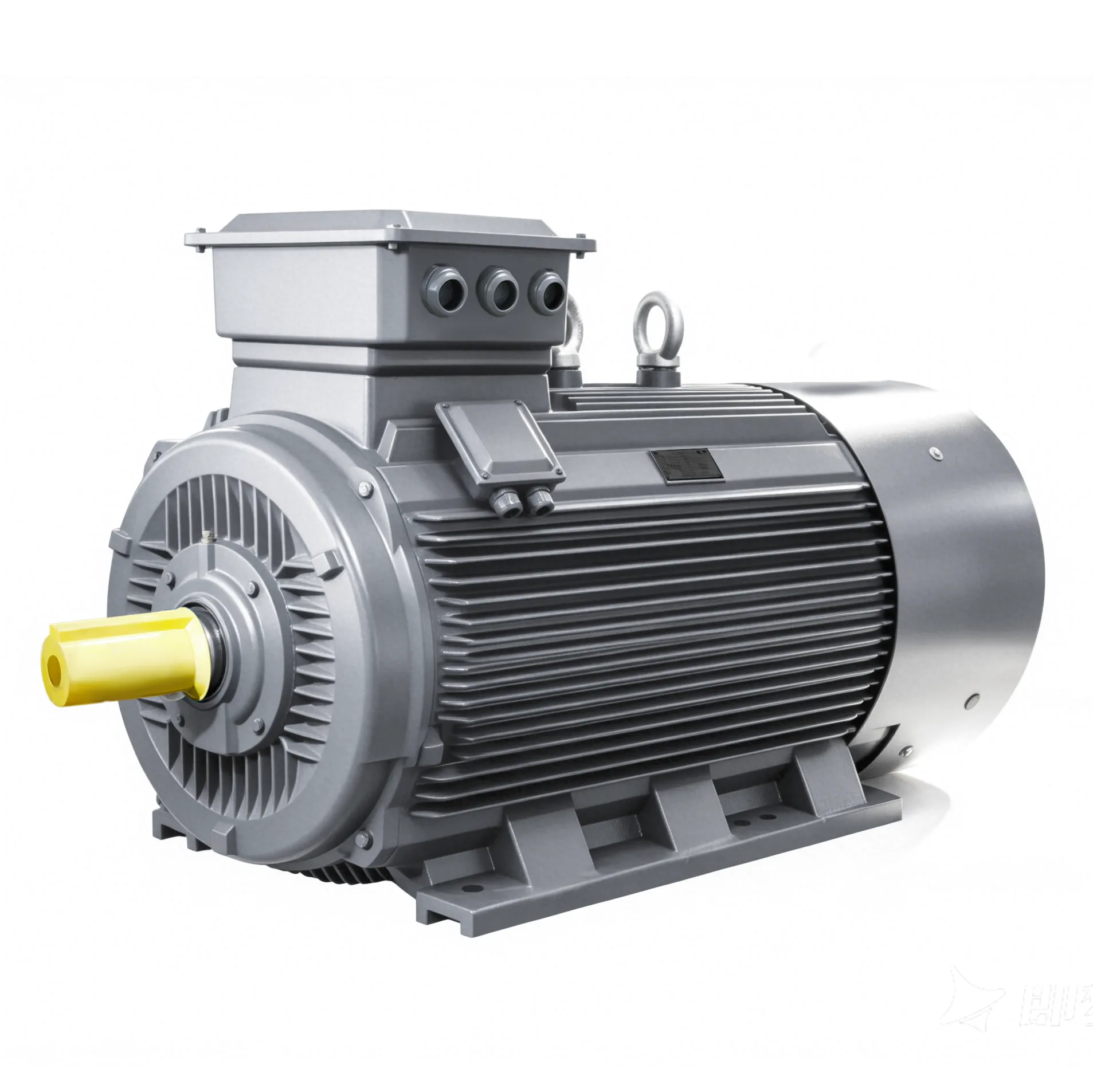
Anhui Yaoda Motor Co., Ltd. manufactures three-phase asynchronous motors — also called three-phase induction motors — from 0.18 kW to 1000 kW in IEC frame sizes H80 to H450. The range covers IE3, IE4 and IE5 efficiency classes, 2, 4, 6 and 8 pole speeds, foot, flange and face mounting, IP55 protection as standard, and explosion-proof or brake versions where the application requires them.
Three-phase asynchronous motor series in this range
- YE3 H80–180 aluminum housing — 0.18–22 kW IE3 motors with a lightweight aluminum frame for OEM machinery, pumps and fans.
- YE3 H80–355 cast iron — 0.75–315 kW IE3 motors for general industrial duty and the most widely specified series.
- YE3 H355–450 low-voltage high-power — 160–1000 kW for compressors, crushers, mills and large pumps.
- YE4 H80–355 — IE4 ultra-high efficiency for long running hours and energy-cost-driven projects.
- YVF3 H355–450 — variable-frequency duty versions of the high-power frames.
Related ranges built on the same platform: YE5 IE5 motors, YVF2 variable-frequency motors, YBX3 explosion-proof motors, YEJ2 brake motors and YD2 multi-speed motors.
How to specify a three-phase asynchronous motor
Power, speed and duty
Start from the driven machine rather than the motor: required shaft power, operating speed (2, 4, 6 or 8 pole), starting torque and duty cycle. A motor chosen on nameplate power alone tends to either overheat on continuous duty or run oversized at a poor power factor.
Efficiency class
IE3 is the usual baseline for export projects. IE4 or IE5 is worth the price difference when running hours are long, or when a specification, utility programme or corporate energy target calls for it. Every order ships with test reports so the declared efficiency can be verified against the nameplate.
Mounting, protection and cooling
B3 foot, B5 flange, B14 face or B35 foot-and-flange mounting, with IP55 as standard and IP56 or IP65 available for washdown and heavy dust. Totally enclosed fan-cooled construction is standard; for variable-speed duty at low frequency an independent cooling fan keeps the winding inside its temperature limit when shaft speed drops.
Supply and starting method
Voltage and frequency are wound to the destination market (380/400/415/440/460/480 V, 50 or 60 Hz). Direct-on-line, star-delta, soft starter and variable-frequency drive starting all change the specification, so confirm the starting method before the winding is fixed. Where a drive is used, specify the motor for inverter duty.
Environment and certification
Dusty, humid, corrosive and classified areas change the specification: explosion-protected frames for gas and combustible dust zones, higher IP ratings for washdown, and anti-condensation heaters in humid climates. Export orders can be supplied with CE, CCC and Ex documentation — see CE certification for three-phase motors.
Related technical guides
- IE3 and IE4 motors: industrial buyer’s guide
- High-voltage vs low-voltage motor selection
- Variable-speed motor selection guide
- Improving three-phase induction motor efficiency
- Common three-phase motor electrical faults
Frequently asked questions
What is the difference between a three-phase asynchronous motor and an induction motor?
They are the same machine. “Asynchronous” describes the rotor turning slightly slower than the rotating field; “induction” describes the rotor current being induced by that field instead of being fed through slip rings. Both terms are used interchangeably for squirrel-cage motors.
Which efficiency class should I choose?
IE3 covers most industrial and export requirements. Choose IE4 or IE5 where the motor runs many hours per year, electricity is expensive, or the project specification demands it — the higher price is normally recovered through lower losses over the service life.
Can a standard three-phase motor run on a VFD?
It can run, but a motor specified for inverter duty is safer: insulation designed for the drive’s voltage spikes, a wider speed range, and independent cooling at low speed. For continuous low-speed duty choose a variable-frequency series such as YVF2 or YVF3.
Do you supply 60 Hz and non-standard voltage versions?
Yes. Motors are wound for 50 Hz or 60 Hz and for the voltages used in the destination market, and OEM nameplate, shaft and mounting modifications are available for volume orders. Send the driven equipment details and destination country for a specification review.