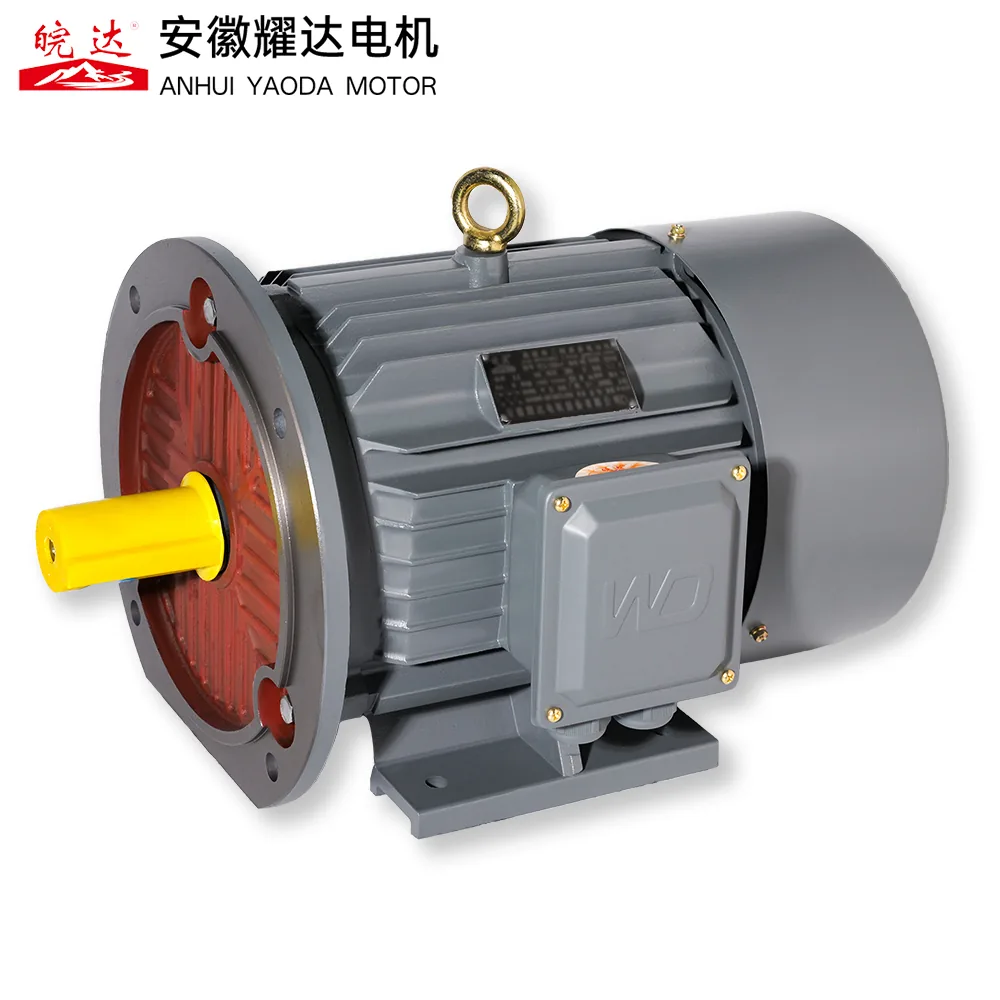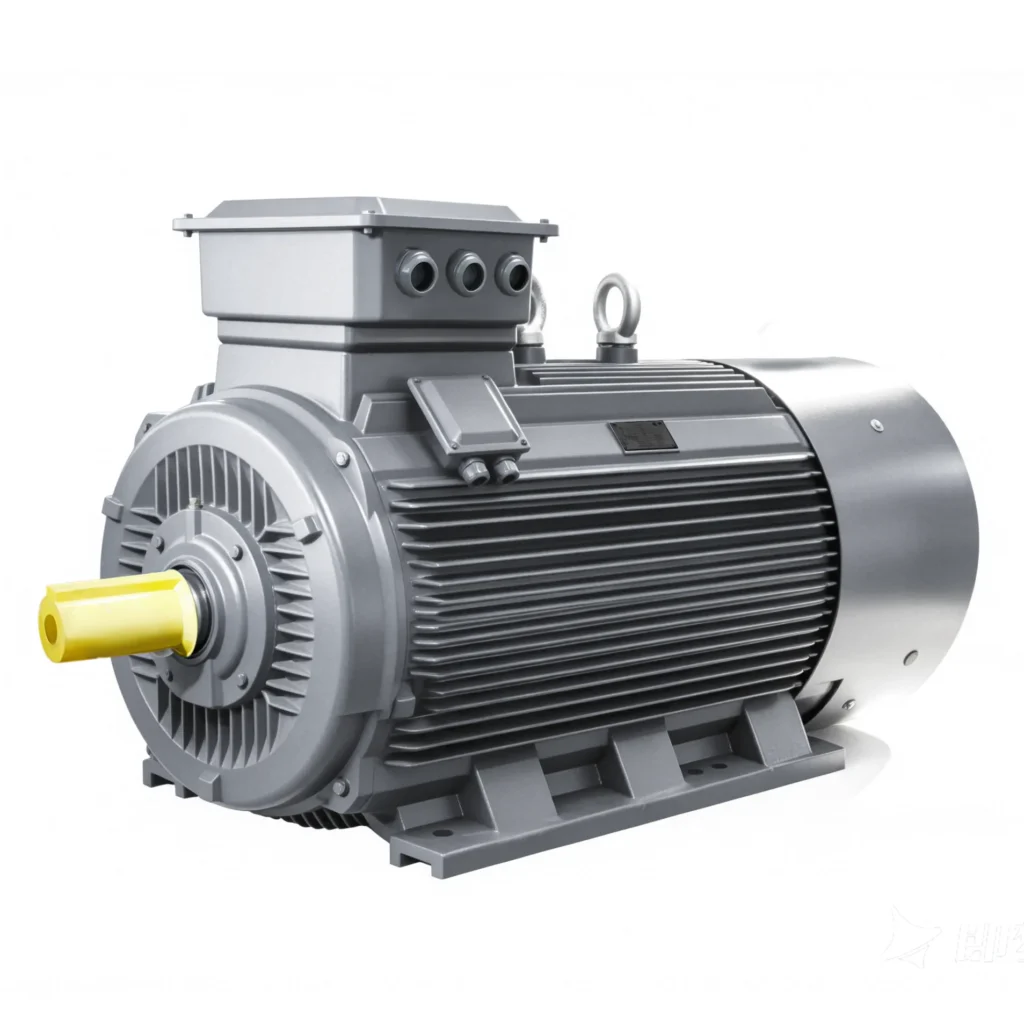






High-Voltage vs Low-Voltage Motors: How to Choose for High-Power Industrial Applications
For a high-power industrial drive, choosing motor voltage is not simply a matter of “higher voltage for bigger motors.” The correct choice depends on the plant power system, motor power, current, cable size and length, starting method, switchgear, maintenance capability and total project cost.
The practical trade-off is straightforward: for the same output power, increasing voltage reduces current. That can make cables, busbars and some distribution components more manageable at high power. The other side of the decision is that higher-voltage motors require more demanding insulation, protection, switching and maintenance arrangements.
Yaoda’s source document uses 6.3 kV and 10 kV as common examples of high-voltage motor supply and uses 300 kW at 380 V as an example of where low-voltage current can become a practical constraint. That example should not be treated as a universal power cutoff. Modern low-voltage high-power motors can extend much further when the site electrical architecture is designed for them.
Use a low-voltage motor when the available supply, current, cable system, switchgear and starting arrangement remain practical for the required power. Evaluate a higher-voltage architecture when current at low voltage drives cable size, busbar capacity, switchgear, voltage drop or starting impact to an uneconomic or impractical level. There is no single kW threshold that applies to every project.
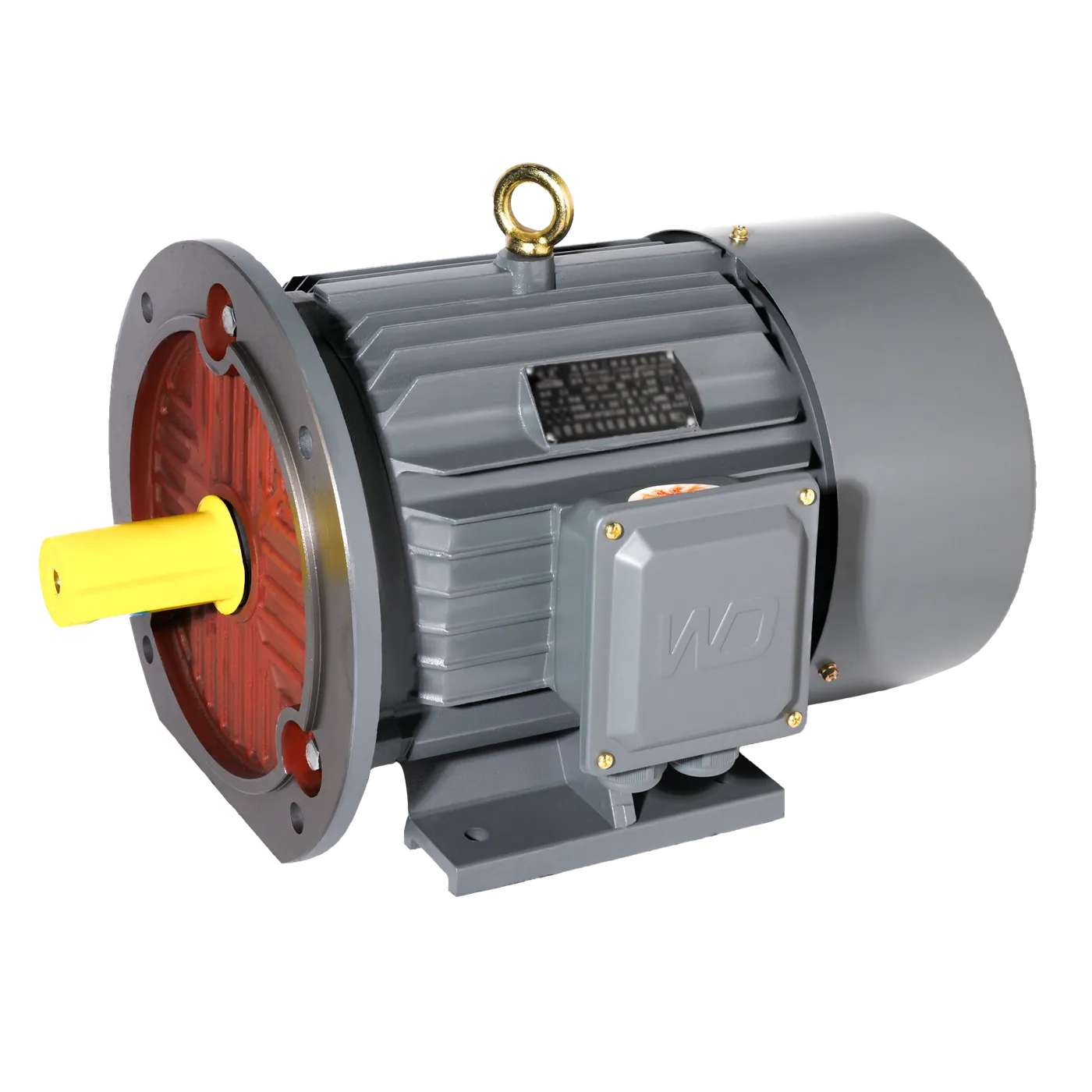
1. What Changes When Motor Voltage Increases?
For a given mechanical output, motor current generally decreases as supply voltage increases. This is the main reason higher-voltage motor systems become attractive as power rises: lower current can reduce the electrical burden on conductors and parts of the distribution system.
The source document also identifies the other side of the trade-off. Higher-voltage motors require more demanding winding insulation and insulation processing, and the associated control and protection system can be more complex and costly. Starting and braking also need closer system-level review on large motors.
| Selection Area | Low-Voltage Motor | Higher-Voltage Motor |
|---|---|---|
| Current at the same power | Higher | Lower |
| Cable / busbar current burden | Can become significant as power rises | Reduced current can simplify high-power distribution |
| Motor insulation system | Relatively simpler | More demanding insulation design and processing |
| Switchgear / protection | Usually simpler and widely available | Requires equipment rated for the higher voltage level |
| Starting system | DOL or reduced-current / VFD options depending on the project | Starting method and grid impact require closer engineering review |
| Maintenance environment | Generally easier for standard industrial teams | Requires high-voltage procedures, competence and safety controls |
| Best fit | Where LV distribution remains practical | Where LV current and distribution cost become impractical |
This table is a selection framework, not a substitute for a project electrical study. The motor cannot be chosen independently from the plant transformer, feeder, cables, switchgear, starter or VFD, protection system and driven load.
2. Do Not Use a Fixed kW Cutoff
One of the most common mistakes in high-power motor selection is using a single power number to decide when “low voltage ends” and “high voltage begins.”
The source document gives 300 kW at 380 V as an example of a point where current may become difficult or expensive to manage. That is useful as an illustration of the current problem, but it is not a universal engineering threshold.
Yaoda’s currently published YE3 H355–450 low-voltage high-power three-phase induction motor range is a good example of why. The published range covers 160–1000 kW at 380/660 V. In other words, high motor power does not automatically require a high-voltage motor; whether low voltage remains practical depends on the complete power-distribution design and operating requirement.
Treat motor power as one input, not the decision. The real question is whether the required current can be handled economically and reliably by the site’s cables, busbars, switchgear, starter/VFD and transformer arrangement.
3. Check the Site Supply Before Choosing the Motor
The first selection question should be the voltage architecture already available at the installation. Choosing a motor voltage that does not match the plant distribution can create more cost than the motor itself.
- available transformer secondary voltage
- short-circuit capacity of the supply
- distance from switchgear to motor
- allowable voltage drop
- existing cable routes and space
- switchgear and starter ratings
- site maintenance capability
A low-voltage high-power motor can be commercially attractive when the site already has suitable 380 V or 660 V distribution and the feeder can accommodate the current. A higher-voltage motor may be more logical when the plant already distributes power at 6.3 kV, 10 kV or another medium-voltage level and stepping down to low voltage would add large current, cable and switchgear requirements.
4. Compare Current, Cable Length and Electrical Infrastructure Together
Current is where the voltage decision becomes most visible in the project. At higher current, conductor cross-section, parallel cable runs, termination space, busbar capacity and thermal loading can all become more demanding.
Cable length matters as well. A motor located close to a low-voltage switchboard may remain practical at a power level that becomes unattractive when the same motor is hundreds of metres away. This is why motor voltage should be reviewed together with feeder length and allowable voltage drop.
| Project Condition | What to Review | Likely Direction |
|---|---|---|
| Existing 380/660 V plant, short feeder | Current, cable size, switchgear capacity | Low voltage may remain practical |
| Long feeder to a high-power motor | Voltage drop, cable quantity, losses, installation space | Compare higher voltage against larger LV feeder cost |
| Plant already has 6.3/10 kV distribution | Starter/protection availability and motor requirements | Higher-voltage architecture may integrate more naturally |
| Variable-speed high-power drive | Motor voltage, VFD topology, speed range, cooling | Evaluate motor + VFD as one system |
| Replacement project | Existing voltage, frame, shaft, starter and cable system | Avoid changing voltage without a full system review |
5. Starting Method Can Decide the Project Before Efficiency Does
Large motors can impose a significant starting demand on the power system. The source document lists direct-on-line starting as well as reduced-current options such as reactor starting, variable-frequency starting and fluid-coupling arrangements.
The correct method depends on more than motor kW. The plant must consider supply strength, allowable voltage dip, load torque, acceleration time, process requirements and whether speed control is needed during normal operation.
| Starting / Control Approach | When It May Be Considered | Key Project Question |
|---|---|---|
| Direct-on-line | Supply is strong enough and process allows the starting impact | Can the grid and driven load tolerate the inrush and acceleration? |
| Reactor / reduced-voltage method | Starting current needs to be limited without continuous speed control | Is starting torque still sufficient? |
| VFD starting / operation | Speed control or controlled acceleration is required | What speed range, torque and cooling are required? |
| Mechanical / fluid coupling approach | Process benefits from a softer mechanical start | How does it affect system efficiency, maintenance and control? |
6. When Is Low Voltage Usually the Better Choice?
Low voltage is often attractive when the plant already has suitable low-voltage distribution, the feeder current remains manageable and the project benefits from simpler equipment, easier maintenance and broad availability of low-voltage starters and drives.
For Yaoda’s current published product range, this is the commercially relevant side of the comparison. The YE3 H355–450 low-voltage high-power series is published at 160–1000 kW with 380/660 V supply options, while the YVF3 H355–450 variable-frequency high-power motor series is published at 132–900 kW, 25–100 Hz and 380 V or customized voltage.
These ranges show why a buyer should not assume that “high power” automatically means “high voltage.” A properly engineered low-voltage system can still serve substantial industrial loads.
7. When Should a Higher-Voltage Motor Architecture Be Evaluated?
A higher-voltage motor system deserves evaluation when the current required at low voltage begins to drive the project toward excessive conductor size, multiple parallel cable runs, large switchgear, difficult voltage-drop control or impractical distribution losses.
It may also fit naturally where the plant already operates a higher-voltage distribution network and has the protection, switching, maintenance procedures and qualified personnel to support it.
The decision should be made at system level. A higher-voltage motor may reduce current, but the motor insulation system, starter, protection, cables, terminations, maintenance procedures and spare-parts strategy all need to be included in the comparison.
8. Compare Lifecycle Cost, Not Only Motor Price
A low-voltage motor may have a simpler purchase and maintenance path, yet the complete low-voltage feeder can become expensive at high current. A higher-voltage motor may reduce conductor current but introduce higher-cost motor insulation, switchgear, protection and maintenance requirements.
| Cost Area | Low Voltage | Higher Voltage |
|---|---|---|
| Motor purchase | Usually simpler construction | Higher insulation and manufacturing requirements |
| Cables / busbars | Can increase sharply with current and distance | Lower current can reduce conductor burden |
| Switchgear / starter | Common LV equipment widely available | Higher-voltage equipment and protection required |
| VFD | LV VFDs are widely available within practical ratings | High-voltage drive architecture can be materially more complex/costly |
| Maintenance | Broader technician familiarity | Requires higher-voltage procedures and competency |
| Project integration | Good fit for existing LV systems | Good fit where higher-voltage distribution already exists |
9. RFQ Checklist: What to Send Before Motor Voltage Is Confirmed
For a high-power electric motor project, do not ask a supplier to choose voltage from kW alone. Provide enough system information for the motor and electrical architecture to be reviewed together.
| RFQ Information | Why It Matters |
|---|---|
| Required output power | Defines the basic motor duty |
| Available supply voltage(s) | Sets the realistic voltage options |
| Frequency | 50/60 Hz or project requirement |
| Poles / required speed | Defines operating speed and torque |
| Starting method | Determines starting-current and control requirements |
| VFD requirement / speed range | Needed for variable-frequency selection |
| Cable distance from switchgear | Affects voltage drop and feeder economics |
| Driven equipment | Pump, fan, compressor, conveyor, mill, etc. |
| Load torque / starting condition | Important for acceleration and starter selection |
| Duty and annual operating hours | Affects thermal and lifecycle evaluation |
| Ambient temperature / altitude | Affects motor selection and cooling |
| Frame / mounting / shaft | Mechanical compatibility |
| Quantity / destination market | Production and documentation planning |
FAQ: High-Voltage vs Low-Voltage Motor Selection
At what power should I switch from a low-voltage motor to a high-voltage motor?
There is no universal kW cutoff. The decision depends on supply voltage, current, cable length, switchgear, starting method and lifecycle cost. The source document uses 300 kW at 380 V as an example of a current-related constraint, while Yaoda’s published low-voltage high-power range extends to 1000 kW at 380/660 V.
Why does higher voltage help on a high-power motor?
For the same output power, higher voltage reduces current. That can reduce the electrical burden on cables, busbars and parts of the distribution system, especially on long feeders or very large loads.
Is a high-voltage motor always more efficient?
No. Voltage class and efficiency are different design decisions. Compare the actual motor efficiency, operating load and complete system losses rather than assuming that higher voltage automatically means higher efficiency.
Can a 380 V or 660 V motor be used for high-power industrial equipment?
Yes, when the plant distribution, feeder current, switchgear, starting system and voltage-drop limits are designed for it. Yaoda’s published YE3 H355–450 low-voltage high-power range covers 160–1000 kW at 380/660 V.
What information should I send for a high-power motor selection?
Provide power, available voltage, frequency, poles or speed, load type, starting method, VFD requirement, cable distance, duty, ambient conditions, mounting and quantity. For replacement projects, also send the existing nameplate and dimensional drawing.
Selection Summary for Industrial Buyers
- Use the available plant distribution as the starting point.
- Calculate whether low-voltage current is practical for the required power and feeder length.
- Choose the starting/control method together with the motor, not after it.
- Compare cable, switchgear, protection and maintenance cost—not only motor purchase price.
- Do not use one fixed kW value as the universal boundary between low and high voltage.
For projects that remain within a low-voltage architecture, Yaoda’s published YE3 H355–450 and YVF3 H355–450 series provide high-power fixed-speed and variable-frequency options. Send the electrical supply, load, starting method, speed requirement and mechanical interface together so the motor configuration can be reviewed against the actual project conditions.