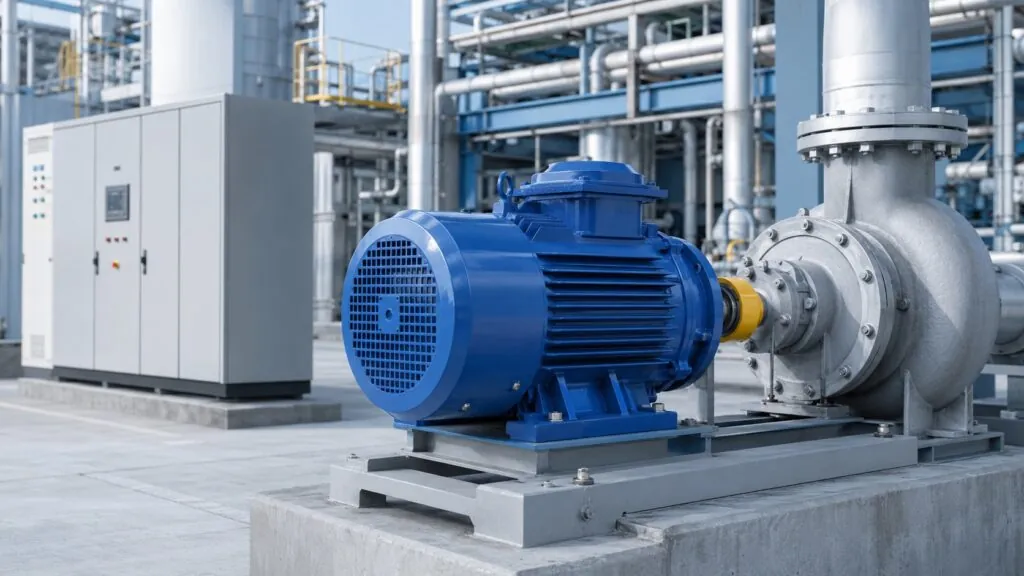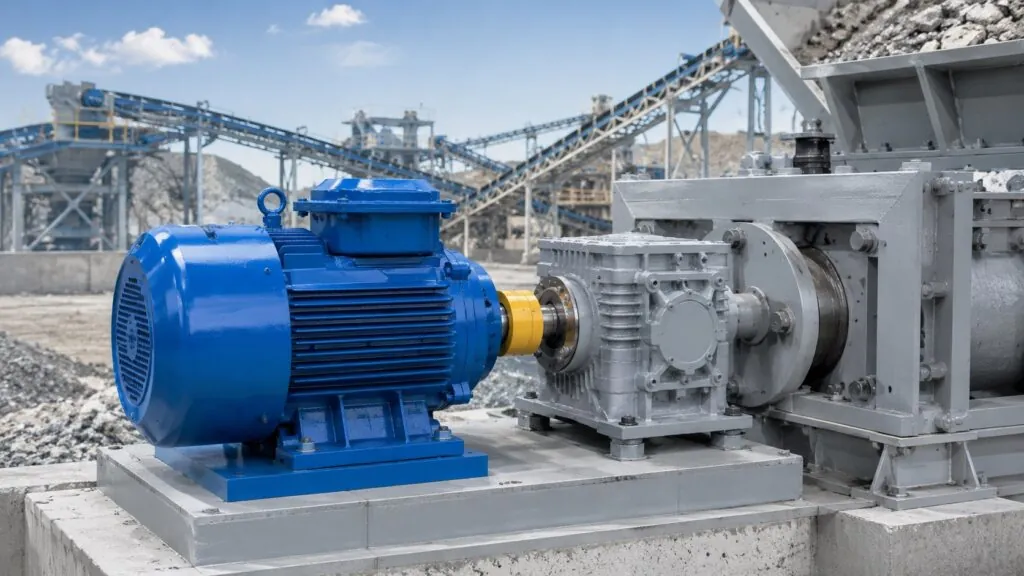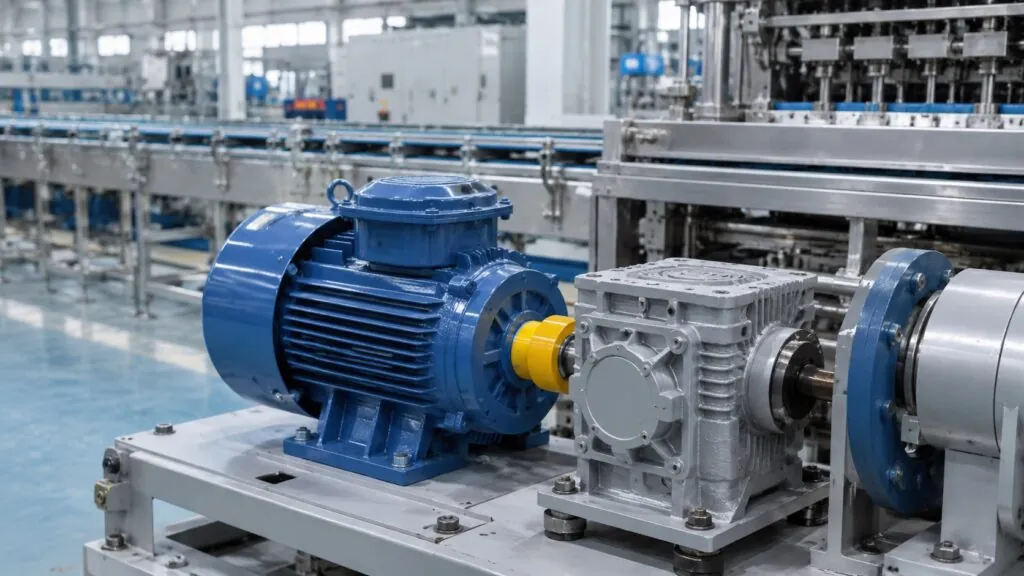




Electric motors are widely used across industrial applications as essential drive components for production equipment, auxiliary systems, and automated machinery. In industrial environments, motors provide stable power for pumps, fans, compressors, conveyors, mixers, reducers, production lines, packaging equipment, and many other mechanical systems that support daily manufacturing operation.
Industrial facilities usually require equipment to operate continuously, efficiently, and reliably. For this reason, motor performance is closely related to production stability, power consumption, maintenance cost, and equipment service life. A properly selected motor helps reduce unplanned downtime, improve transmission efficiency, and support smoother operation under different load conditions.
Yaoda motors can be applied to general industrial machinery, material handling systems, processing equipment, ventilation systems, pumping systems, transmission units, and automated production lines. According to different application requirements, motors can be selected by rated power, voltage, speed, frame size, mounting method, protection level, insulation class, efficiency grade, and duty cycle.
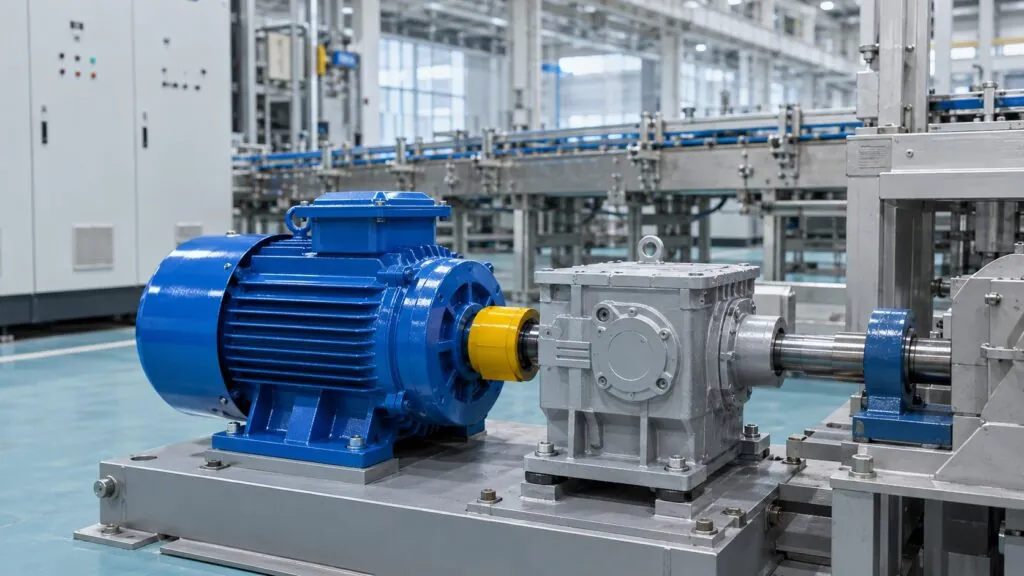
For industrial applications, motor selection should consider not only power output, but also torque performance, starting characteristics, continuous-duty capability, heat dissipation, vibration control, and compatibility with reducers, couplings, belt drives, or control systems. In some operating environments, higher protection motors or special-duty motors may also be required according to actual working conditions.
A suitable electric motor helps industrial equipment maintain stable operation, improve energy efficiency, and reduce maintenance frequency. For equipment manufacturers, plant operators, and industrial project users, Yaoda provides reliable motor options for a wide range of industrial drive applications, helping production systems operate safely, efficiently, and consistently.
Motor selection by industrial equipment type
Industrial drives fall into a few load families, and each one places different demands on the motor. Selecting by load family first, then by power and mounting, avoids most misapplications:
- Pumps and fans (variable torque): when flow or pressure is regulated by speed, YVF2 variable-frequency motors with a model-specific operating range save more energy than throttling valves or dampers.
- Conveyors and material handling: frequent starts and high breakaway torque — YE3 IE3 motors (H80–355, 0.55–315 kW for the listed models) with the correct service factor, or VFD motors where soft starting is required.
- Compressors, mixers and crushers: heavy continuous duty; YE4 IE4 motors and YE5 IE5 motors are chosen where efficiency, temperature rise and bearing life are the limiting factors.
- Machine tools, packaging and positioning: controlled stopping and repeatable indexing with YEJ2 brake motors, or two-, three- and four-speed operation without a drive using YD2 pole-changing multi-speed motors.
- Chemical, coating and dust-handling areas: YBX3 flameproof motors, YFBX3 dust explosion-proof motors or YBVF2 explosion-proof VFD motors only after the exact configuration's current certificate and nameplate marking have been matched to the gas or dust classification, temperature limits and duty.
Specification checklist for industrial drives
Before a quotation is issued, the following points should be fixed. Getting them right the first time avoids rework at installation:
- Rated power, voltage (380 / 400 / 415 / 440 / 660 V) and frequency (50 or 60 Hz)
- Speed and pole count, or the required speed range when a VFD is used
- Mounting: B3 foot, B5 flange or B35, plus shaft and flange dimensions for replacement units
- Protection class (IP55 standard, IP56 / IP65 for wet or dusty plants) and insulation class
- Duty cycle — continuous S1 for most plant equipment, with duty factor confirmed for intermittent drives
- Ambient temperature, altitude and whether a separate cooling fan is needed at low speed
Frequently asked questions
Which motor series should I choose for a general industrial drive?
Start with YE3 IE3 motors (H80–355, 0.55–315 kW for the listed models) for standard 380–415 V 50 Hz drives in H80–355 frames. Where electricity cost or heat is critical, the same frames are available as YE4 IE4 motors and YE5 IE5 motors.
Can one motor type cover pumps, fans and conveyors in the same plant?
Often yes — a VFD motor such as YVF2 covers variable-torque and constant-torque duties and simplifies spares. However, drives with high breakaway torque (loaded conveyors, crushers) should be checked against the starting torque curve before standardising.
How do I replace a motor without changing the machine?
Send the existing nameplate, shaft and flange drawing or a photo of the mounting. Frame size, shaft extension, flange dimensions and terminal box position can be matched, and terminal box position and colour can be produced to order.
Related reading
Motor ranges: all Yaoda motor series. How the motors are manufactured and tested: factory and testing workshops. Application guides: machinery applications, mining equipment and power industry.