



Energy-Efficient Industrial Motors: IE3, IE4, IE5, VFD and PMSM Selection for OEM Projects
For OEM machinery manufacturers and industrial project buyers, motor efficiency is increasingly becoming a specification requirement rather than an optional upgrade. The practical issue is no longer simply whether to use an energy-efficient motor, but which efficiency level and drive technology make sense for the actual load, operating hours, speed range and destination market.
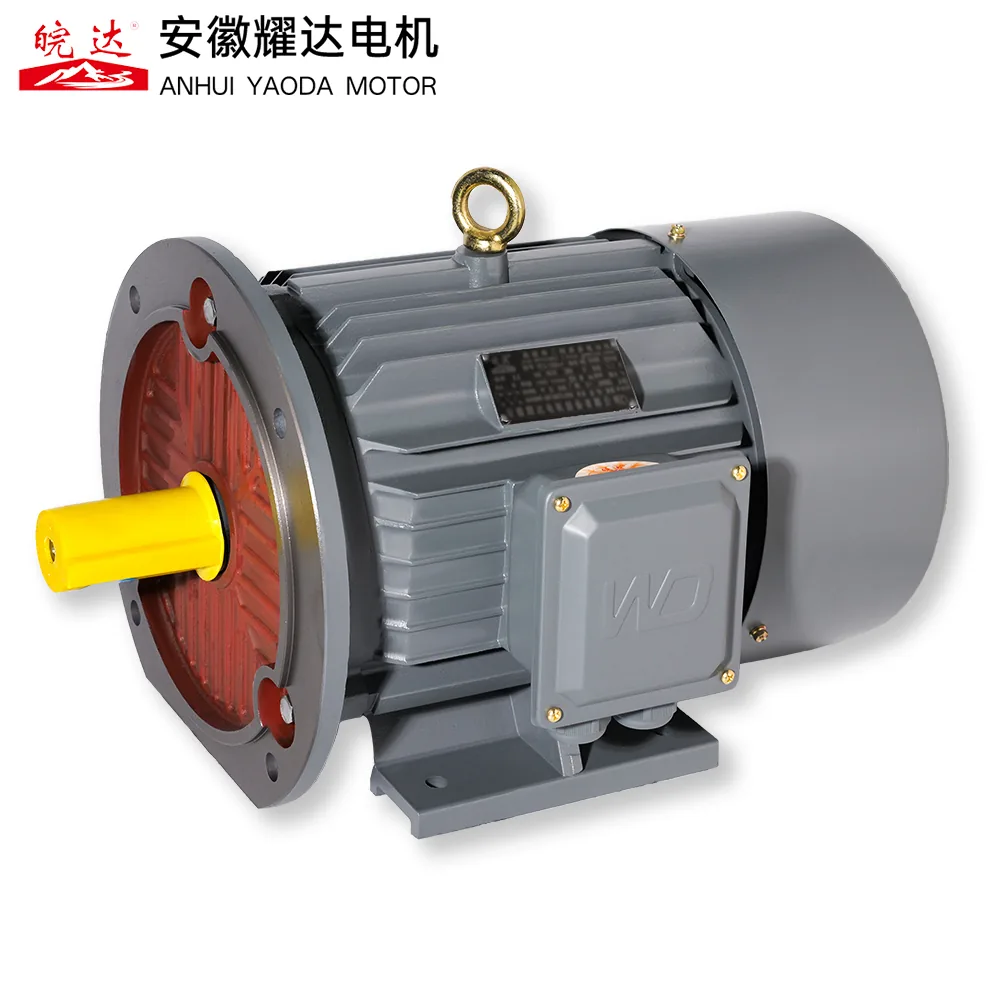
At Yaoda Motor, this is why our industrial motor portfolio is not built around a single “high-efficiency motor.” Our product range covers IE3, IE4 and IE5 three-phase induction motors, variable-frequency motors, high-power industrial motors and permanent magnet synchronous motors. Each addresses a different combination of efficiency requirement, load profile and speed-control demand.
For buyers comparing motor options for new OEM equipment or industrial projects, the following is how we recommend approaching the decision.
IE3 Is Becoming the Starting Point, Not the End Point
The regulatory direction in major industrial markets is already clear. The European Commission states that three-phase motors within the applicable 0.75–1,000 kW range must reach IE3 efficiency, while motors within certain 75–200 kW categories have been required to meet IE4 since July 2023. The regulation also includes efficiency requirements for variable-speed drives and information requirements at different motor operating points. European Commission – Electric Motors Ecodesign Requirements.
China follows the same general direction. GB 18613-2020 – Minimum Allowable Values of Energy Efficiency and Values of Efficiency Grades for Motors remains the current mandatory national standard and has been implemented since June 2021.
For an equipment manufacturer exporting to different markets, this means motor efficiency should be considered during the equipment design stage rather than after the machine has already been finalized.
The published performance table for our YE3 IE3 induction motors lists H80–355 models rated 0.55–315 kW for general industrial machinery. Other frame sizes and ratings require model-specific confirmation. The selected model must meet the required efficiency, construction and application specifications.
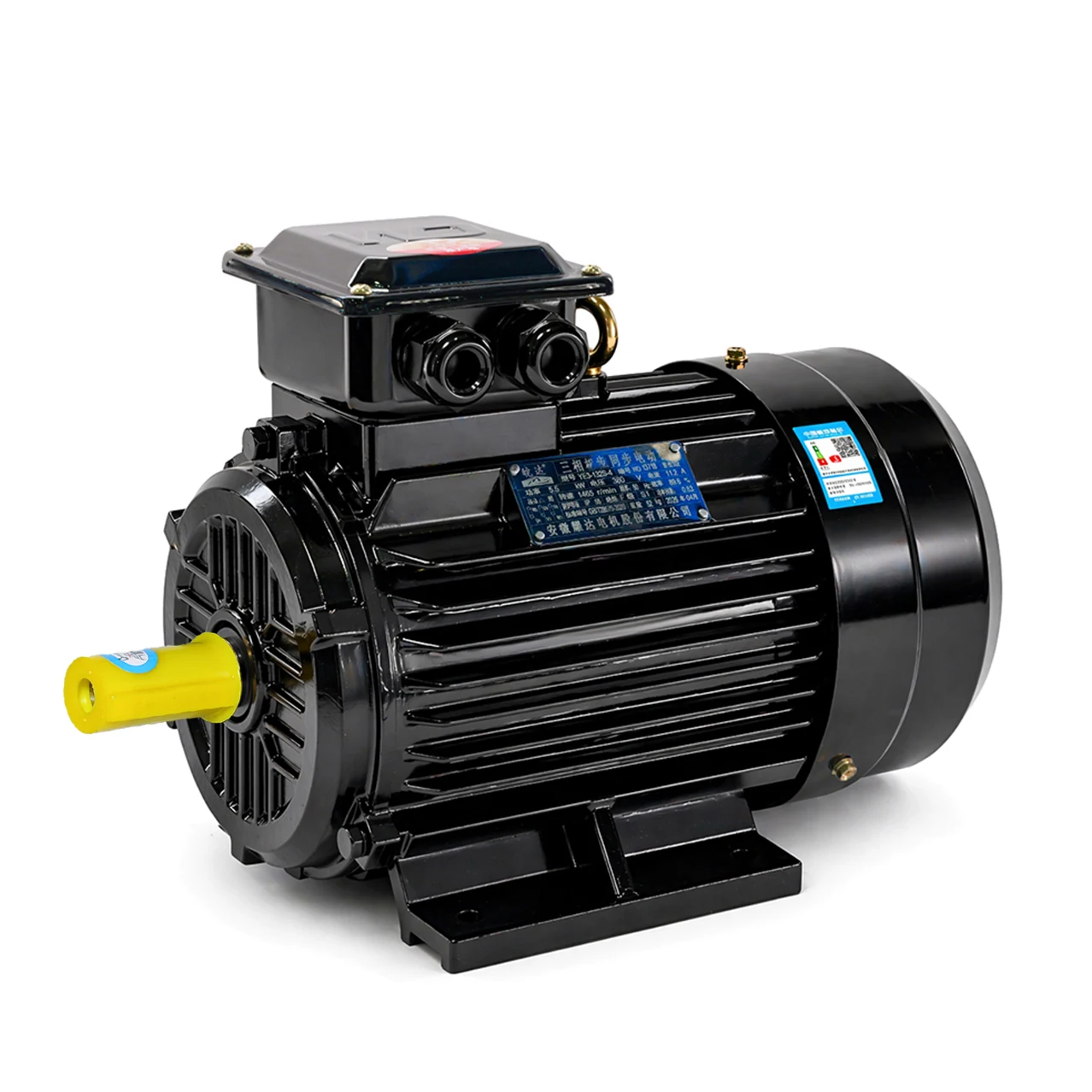
For projects requiring a higher efficiency level, our YE4 IE4 three-phase induction motor provides the next efficiency platform. Where the project specification or lifecycle-energy target goes further, the YE5 IE5 induction motor extends the available efficiency range.
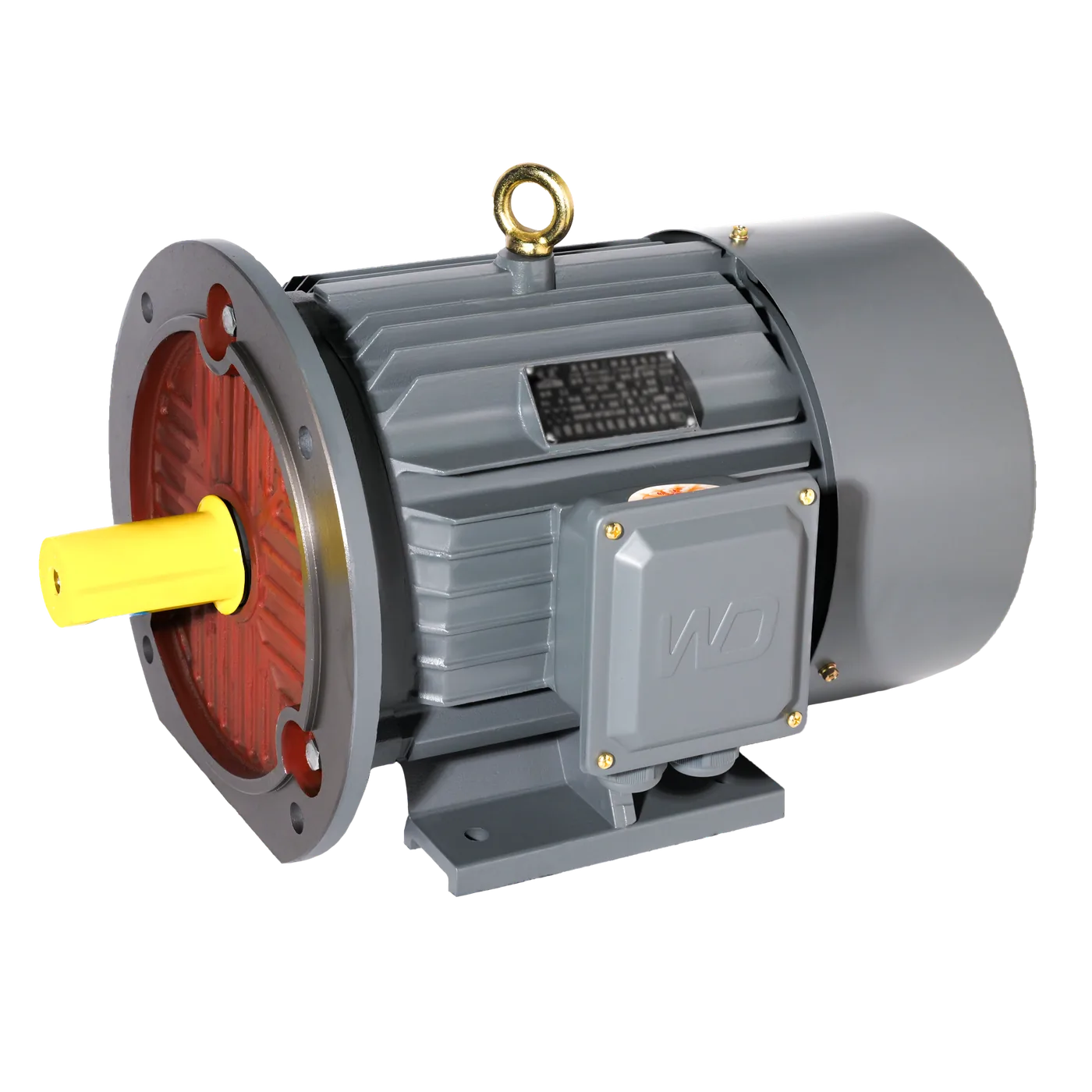
The important point for buyers is that IE3, IE4 and IE5 should not be treated simply as good, better and best. The correct choice depends on the application and the economics of the complete machine.
When Does Moving from IE3 to IE4 or IE5 Make Commercial Sense?
For a motor that runs only occasionally, the difference in purchase price may carry more weight in the procurement decision. For a motor operating several thousand hours per year, electricity consumption becomes much more important over the equipment lifecycle.
This is especially relevant to continuously operated pumps, fans, compressors, conveyors and production machinery. In these applications, buyers should compare at least four factors before specifying a higher efficiency class:
- annual operating hours;
- actual motor load rather than only nameplate power;
- local electricity cost;
- expected equipment service life.
For example, moving from IE3 to IE4 may be commercially meaningful on a continuously operated production line but much less important on an auxiliary machine operating for a limited number of hours each week.
This is why we normally prefer to review the customer's motor power, voltage, frequency, poles or required speed, duty, driven equipment and annual operating pattern before recommending an efficiency level.
For Variable Loads, Motor Efficiency Class Is Only Half of the Decision
A common procurement mistake is to focus heavily on IE efficiency while ignoring the way the equipment actually operates.
A pump, fan or compressor may use an IE4 motor but still operate inefficiently if the process frequently requires less than full output and the system controls capacity through mechanical throttling or another unsuitable method.
The International Energy Agency identifies both upgrading motor systems and increasing the use of variable-speed drives as important measures for industrial energy efficiency, particularly in variable-load applications. IEA – Energy Efficiency 2025: Industry.
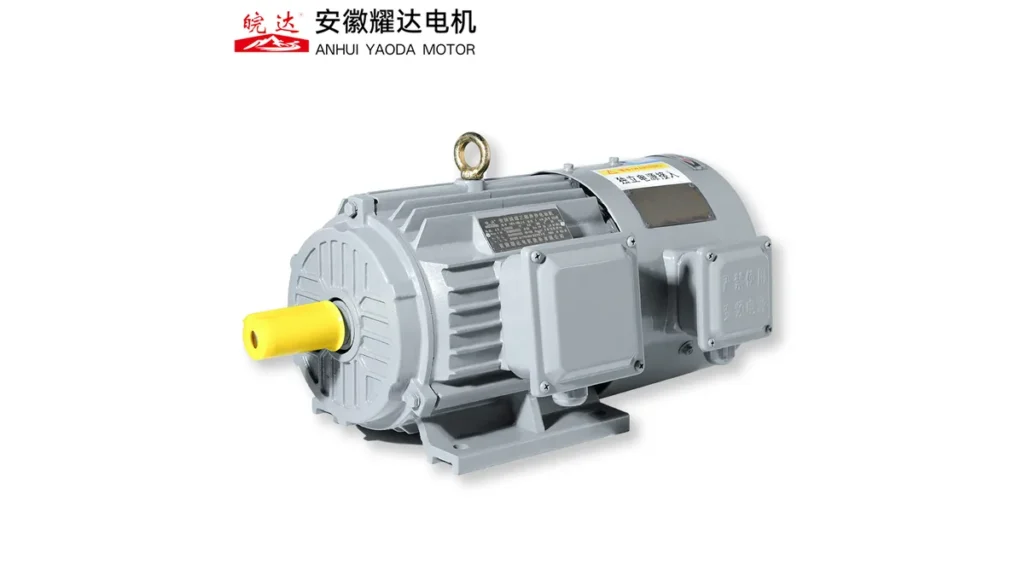
For this type of application, the published YVF2 performance table lists H200–355 models rated 18.5–315 kW. Other YVF2 frame sizes and ratings require model-specific confirmation. The series is intended for industrial equipment requiring adjustable-speed operation.

For larger drive systems, our YVF3 H355–450 variable frequency motor covers approximately 132–900 kW.
From a project perspective, the question therefore changes from:
“Should we specify IE3 or IE4?”
to:
“Is this a constant-load application, or can controlling motor speed according to actual process demand reduce more energy than changing the efficiency class alone?”
That distinction matters considerably in pumps, fans, compressors and process equipment with changing operating conditions.
Where Does a Permanent Magnet Synchronous Motor Fit?
Another option increasingly evaluated in high-efficiency drive projects is the permanent magnet synchronous motor.
Our TYP permanent magnet synchronous motor range covers approximately 0.75–355 kW and is designed for VFD-driven industrial applications.

We do not recommend treating PMSM as a universal replacement for a three-phase induction motor. The decision should be based on whether the application can make practical use of its efficiency and variable-speed characteristics.
For a conventional fixed-speed machine where simplicity, familiar maintenance and straightforward replacement are priorities, an IE3 or IE4 induction motor may remain the more practical solution.
For equipment with long annual operating hours, variable-speed demand or a strong lifecycle-energy target, a PMSM becomes more relevant for evaluation.
For OEM buyers, this distinction is important because changing from an induction motor to a permanent magnet motor can also affect the drive configuration, control strategy and equipment design. It should therefore be considered during engineering rather than treated as a last-minute motor substitution.
High-Power Motors Need a Different Efficiency Calculation
The economics become even more important as motor output increases.
Our YE3 H355–450 high-power electric motor range covers approximately 160–1,000 kW for large industrial equipment, while the YVF3 platform provides variable-frequency operation for high-power applications.
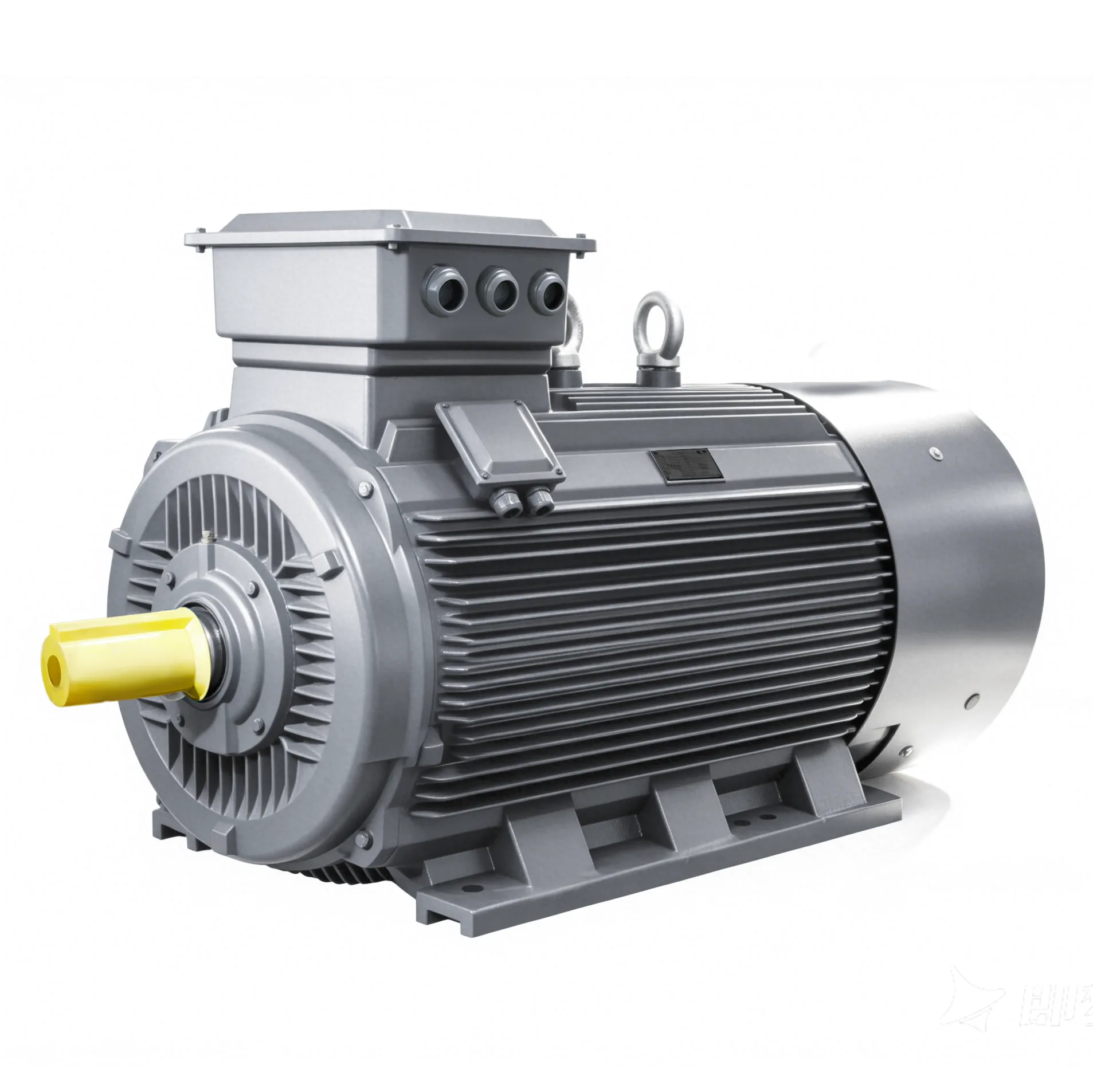
At these power levels, purchasing decisions should not be based only on motor price per kilowatt. A buyer should evaluate the expected operating point, annual running hours, starting method, load variation and whether speed regulation is required.
A high-power motor that operates continuously near its design load presents a different efficiency case from a similarly rated motor that spends much of its operating time at reduced process demand.
For large pumps, fans, compressors, conveyors and heavy industrial machinery, we therefore recommend confirming the actual operating profile before finalizing the motor and control configuration.
How We Match an Energy-Efficient Motor to an OEM Project
For most OEM and industrial projects, we do not start motor selection by asking the customer to choose between IE3, IE4, IE5 or PMSM. We start with the machine.
The information that normally affects our recommendation includes:
| Project Information | Why It Matters |
|---|---|
| Required output power | Defines the basic motor size and available series |
| Voltage and frequency | Determines electrical configuration and destination-market compatibility |
| Required speed / number of poles | Defines the base operating speed |
| Driven equipment | Pump, fan, compressor, conveyor and machinery loads behave differently |
| Constant or variable load | Helps determine whether fixed-speed or VFD operation is more appropriate |
| Annual operating hours | Strongly affects the value of higher motor efficiency |
| Mounting arrangement | Required for mechanical compatibility with the equipment |
| Operating environment | Affects enclosure, protection and whether a specialized motor is required |
| Destination market | Helps determine applicable efficiency and project requirements |
Once these parameters are clear, the motor options become much easier to compare.
A standard OEM machine may be well matched to a YE3 IE3 motor. A continuously operated machine may justify YE4 or YE5. A pump or fan with substantial load variation may benefit more from a YVF variable-frequency solution. A project requiring high efficiency together with variable-speed operation may justify evaluating the TYP PMSM platform.
The Direction of Industrial Motor Procurement Is Clear
The industrial motor market is moving toward higher efficiency, but we do not expect every application to converge on one motor technology.
Instead, buyers will increasingly need to choose between IE3, IE4 and IE5 induction motors, variable-frequency motors and permanent magnet synchronous motors according to the actual operating economics of the equipment.
This is also consistent with the broader policy direction outside China. The U.S. Department of Energy adopted new and amended energy-conservation standards for expanded-scope electric motors in 2024, reinforcing the wider international movement toward more efficient industrial motor systems. U.S. Department of Energy – Expanded Scope Electric Motor Standards.
For OEM manufacturers, distributors and industrial project buyers, this makes the motor specification stage more important. Selecting the correct motor is increasingly a balance between efficiency class, speed-control requirement, operating hours, equipment load and lifecycle electricity cost rather than a comparison of purchase price alone.
Send Us Your Motor Requirements
If you are selecting an energy-efficient motor for new machinery, replacing an existing industrial motor or comparing IE3, IE4, IE5, VFD and PMSM options, send us your application requirements for review.
Please include power, voltage, frequency, speed or poles, mounting, driven equipment, operating hours, speed-control requirement, quantity and destination market. Our team can help identify the appropriate Yaoda motor series before quotation.