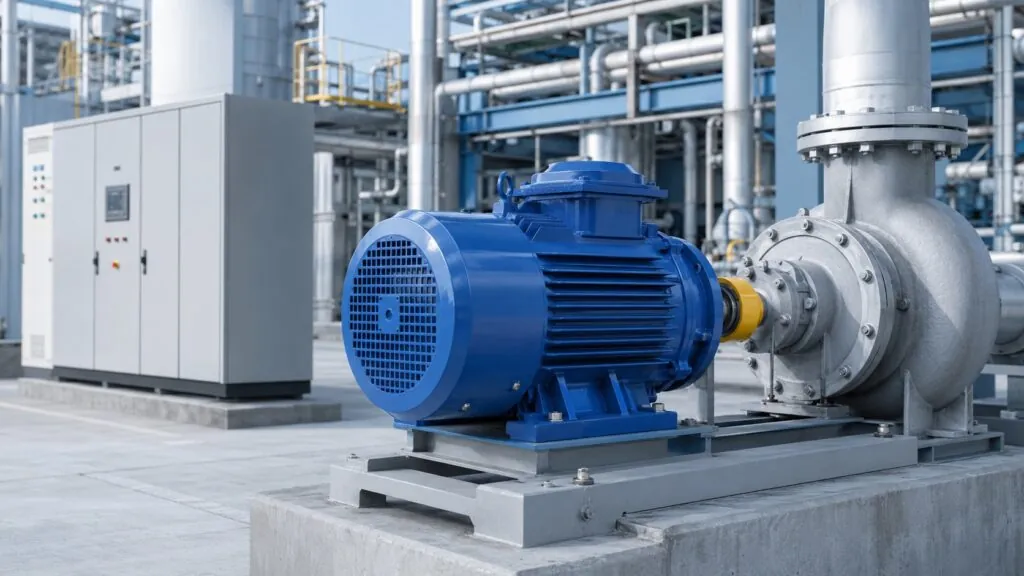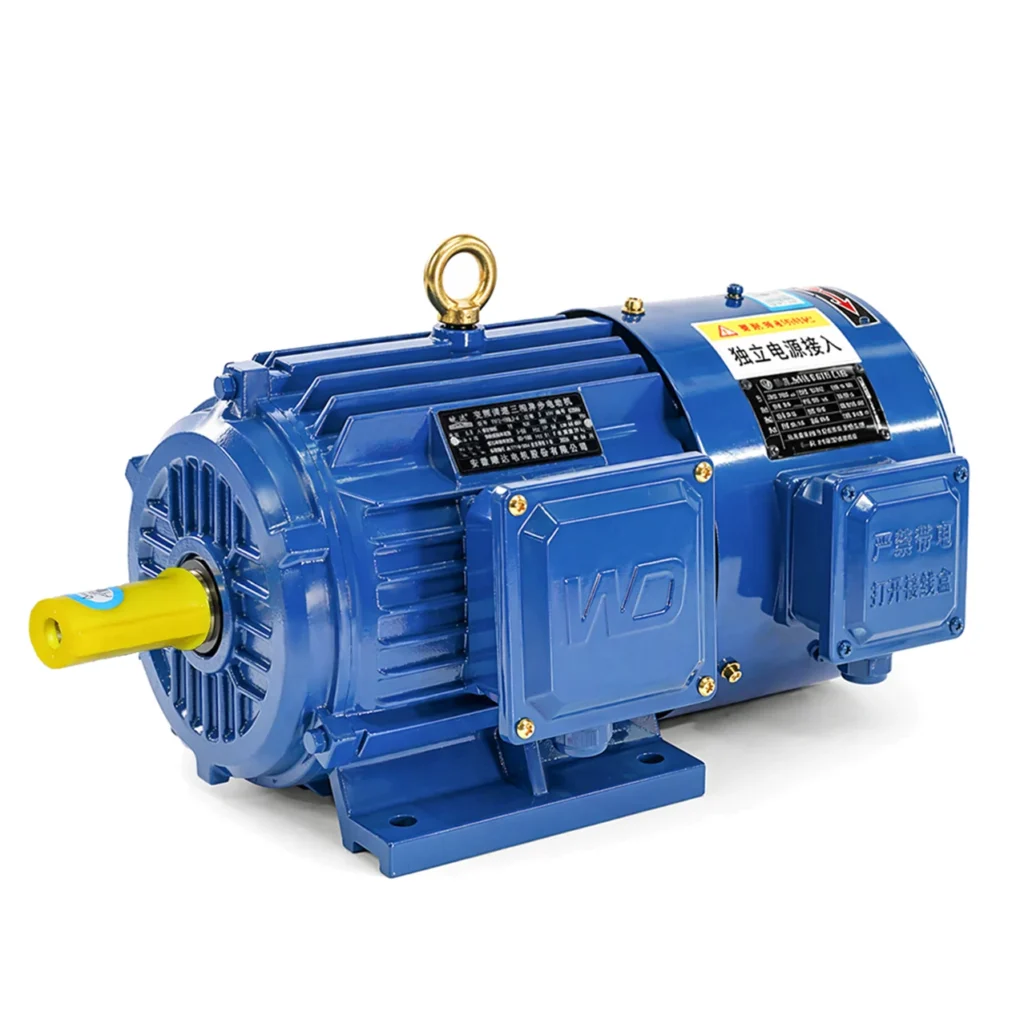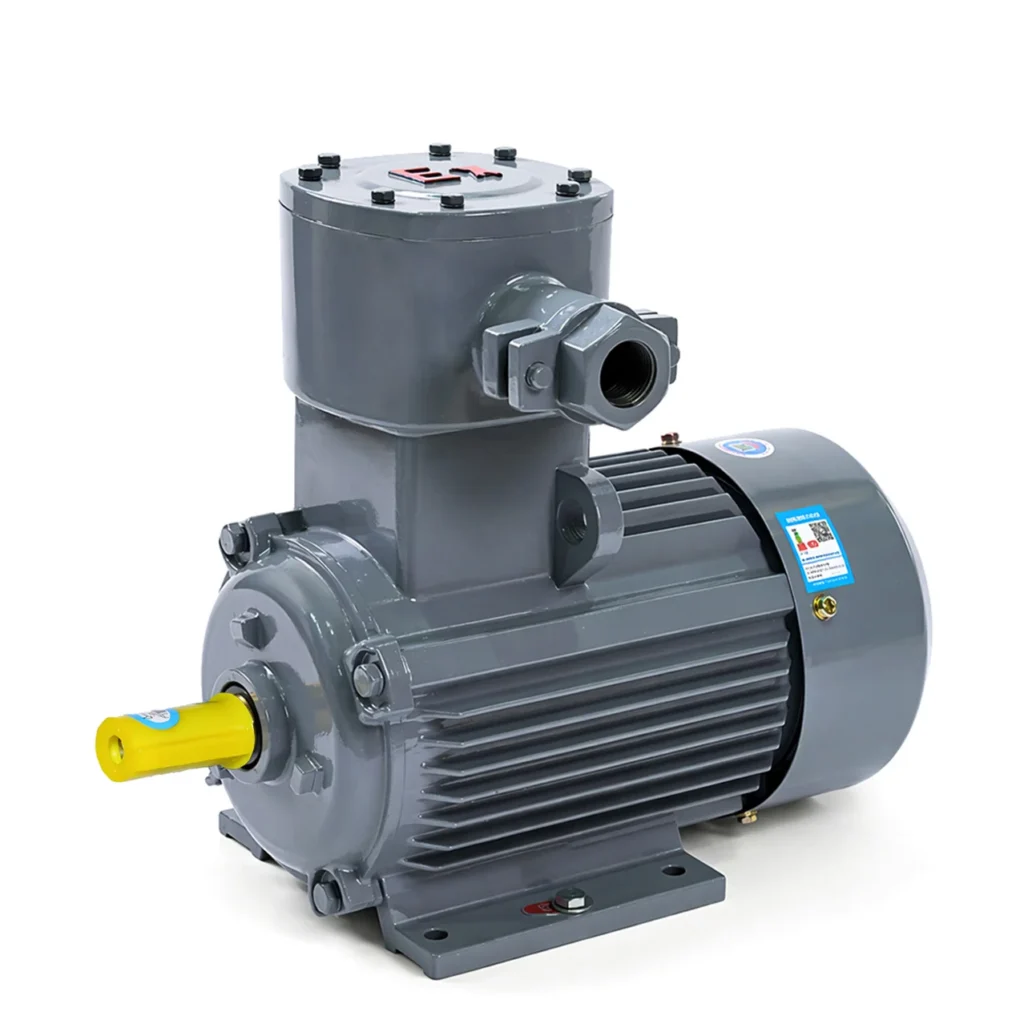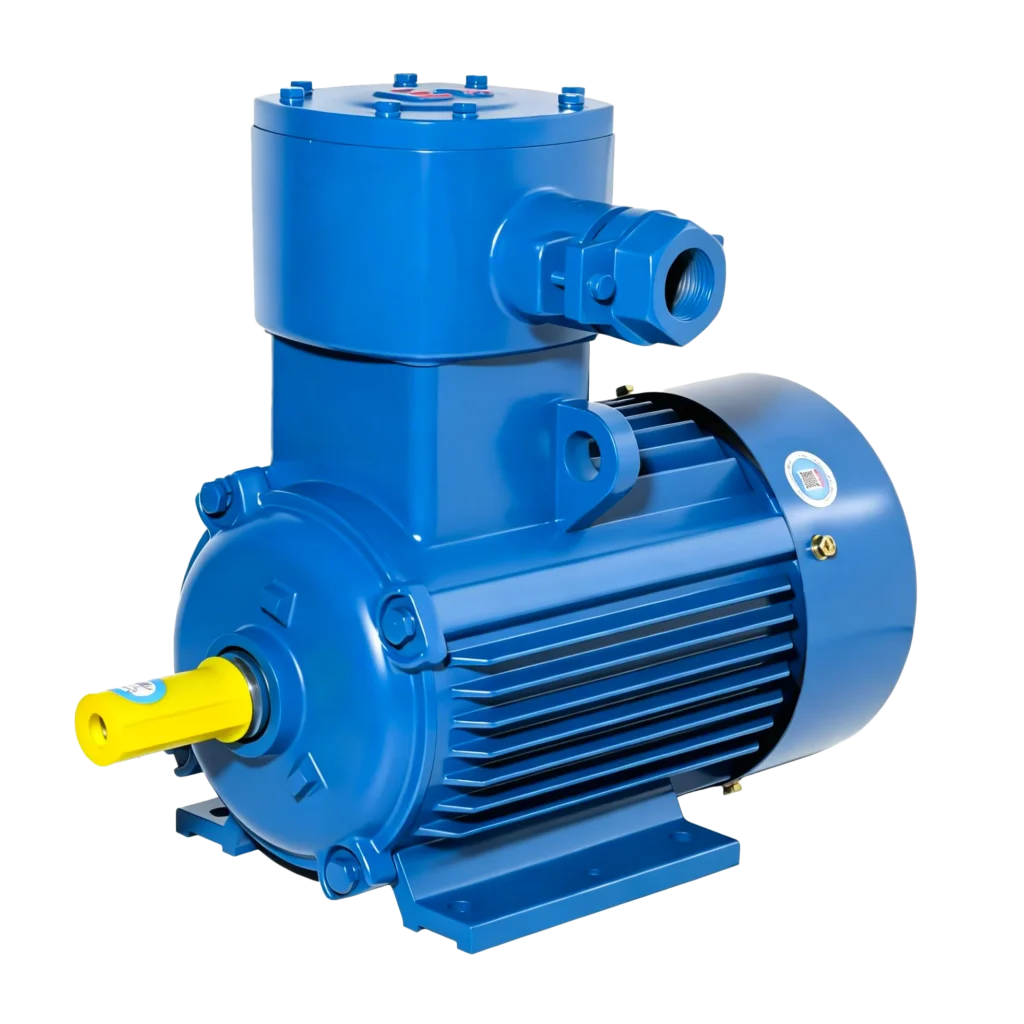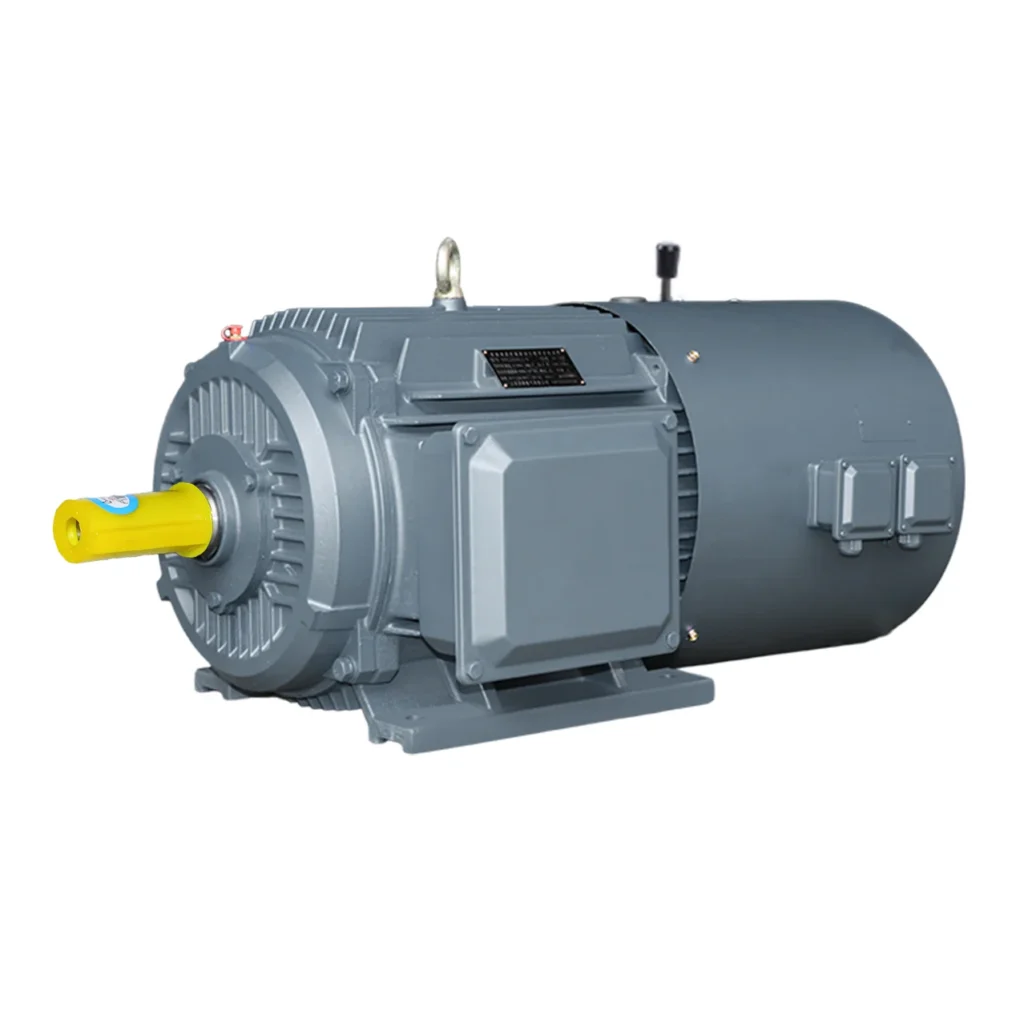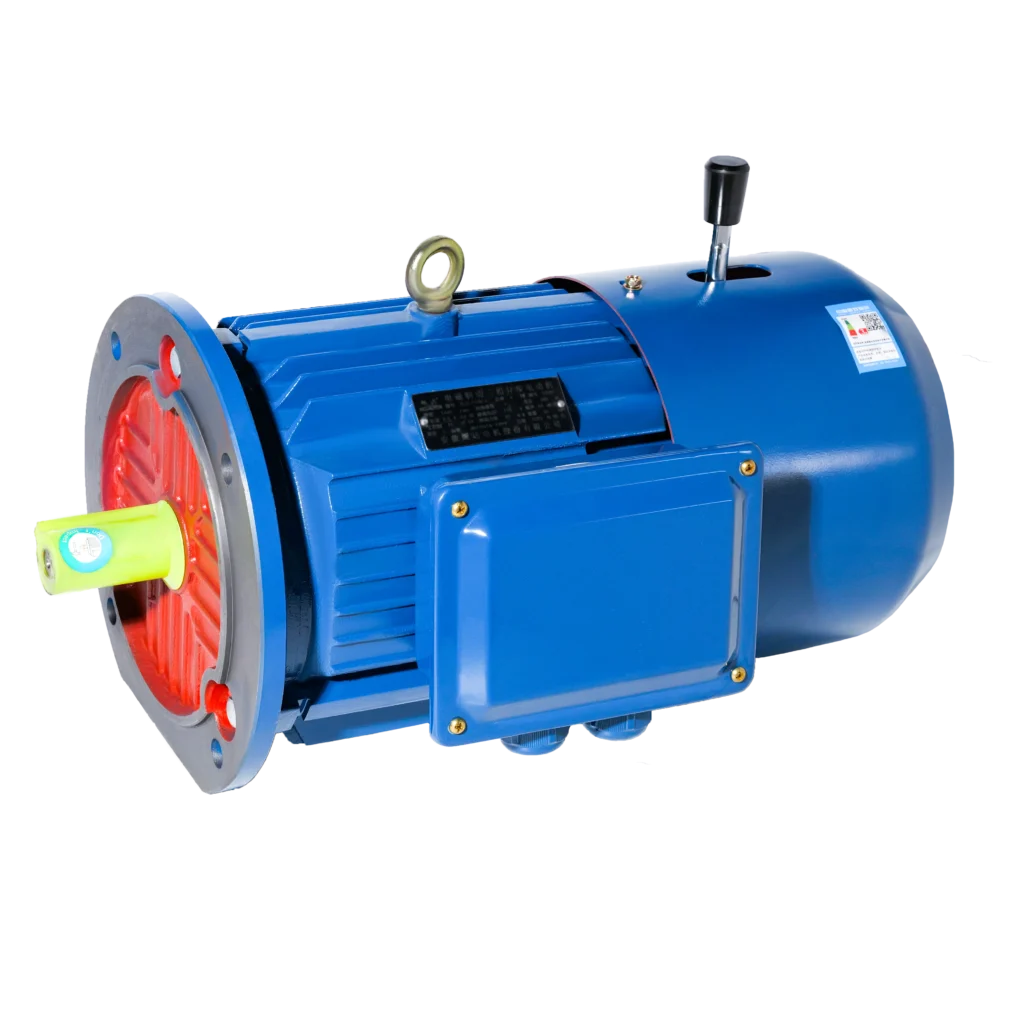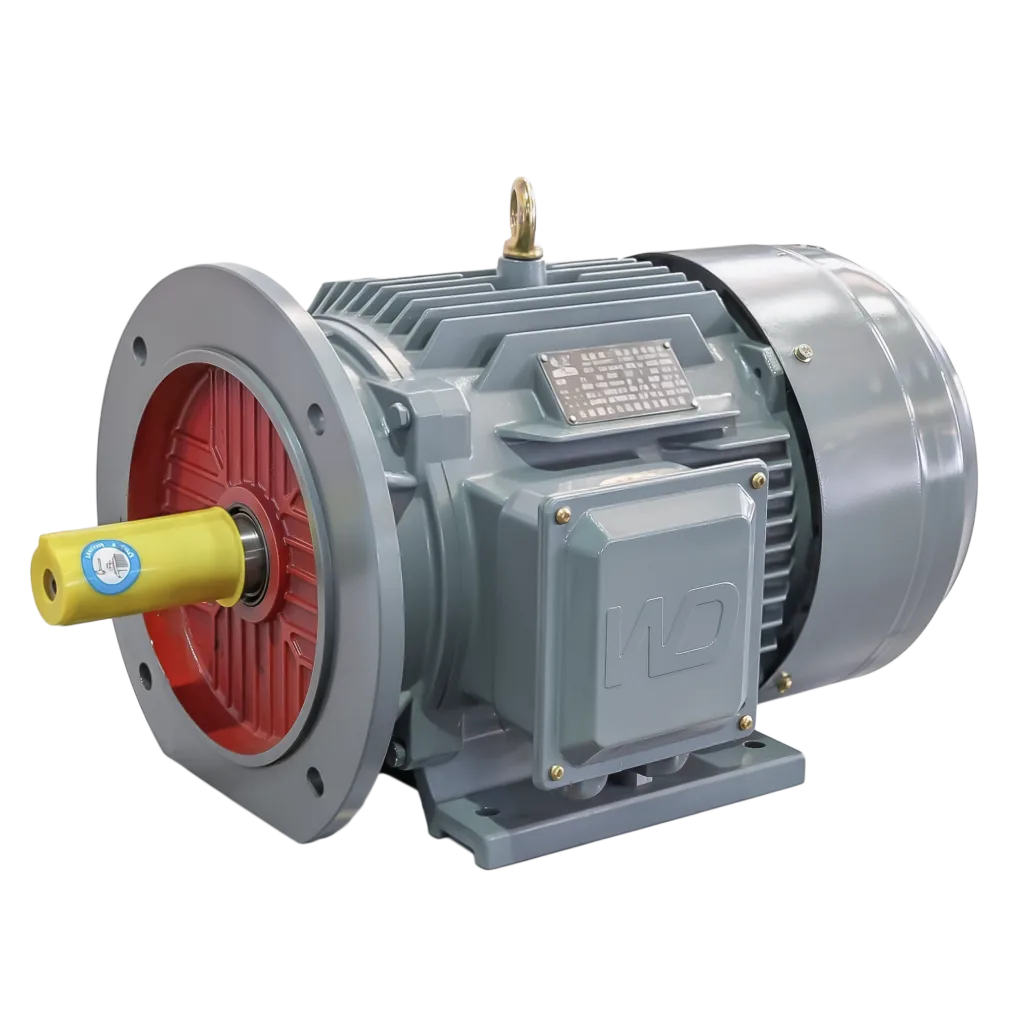






Electric motors for fans and blowers are selected around airflow, pressure, impeller inertia and the operating-speed range. Yaoda supplies IEC three-phase motors for centrifugal fans, axial fans, cooling-tower fans, forced- and induced-draught fans, dust-extraction systems and other ventilation equipment used in OEM and industrial projects.
China manufacturer and supplier: Yaoda manufactures the Electric Motors for Fans and Blowers at its own motor factory in Chuzhou, Anhui, and supplies OEM, distributor and wholesale orders. Send the application, quantity and destination market for a factory supply review.

Fan motor options: IE3 and IE4 induction motors · YVF2 and YVF3 variable-frequency motors · 2, 4, 6 and 8-pole configurations by series · B3, B5 and B35 mounting · IP55 protection for standard industrial areas · explosion-proof options for classified environments where the exact certificate and marking apply.
Electric Motors for Fans and Blowers
Fan and blower loads are usually governed by the impeller curve, duct resistance and required operating speed. The motor must provide enough starting torque for the impeller and drive train, remain within its temperature rise at the operating point, and accommodate the starting or speed-control method used by the ventilation system.
A fan that is oversized on motor power can still have a starting or acceleration problem. Impeller inertia, damper position, belt-drive arrangement and the starting method should therefore be reviewed together with the motor rating.
Motor Options for Fan and Blower Applications
| Ventilation duty | Motor option | Selection focus |
|---|---|---|
| Fixed-speed fan or blower | YE3 IE3 induction motor | Rated speed, starting torque, mounting and ambient conditions |
| Continuous-duty energy-focused fan | YE4 IE4 motor | Annual operating hours and lifecycle energy use |
| VFD-controlled fan | YVF2 variable-frequency motor | Speed range, drive output, cooling and bearing protection |
| High-power process fan | YVF3 H355–450 motor | Continuous torque, frequency range and mechanical interface |
| Classified or explosive atmosphere | YBX3 / YBVF2 | Exact area classification, gas or dust group, temperature class and marking |
↔ Swipe or drag horizontally to view all specifications.
Fan Torque, Speed and Starting Requirements
Many fan loads increase rapidly with speed, so the motor and control method must cover the acceleration period as well as normal operation. Dampers, inlet vanes and VFD ramps can change the starting and acceleration profile. For direct-on-line or star-delta starting, confirm that the fan and coupling can tolerate the resulting torque and acceleration.
When a VFD is used, the fan's minimum operating speed matters. A self-cooled motor produces less cooling as shaft speed falls. Continuous low-speed duty may require a motor specified for inverter operation and, where necessary, an independent cooling fan.
Typical Fan and Blower Applications
- Centrifugal and axial ventilation fans.
- Cooling-tower and air-handling fans.
- Forced- and induced-draught fans in industrial systems.
- Dust extraction and fume extraction equipment.
- Process cooling and drying equipment using blowers.
- Fans driven through belts, couplings or direct shaft connections.
What to Send for a Fan Motor Quotation
- Fan or blower type and the driven equipment drawing.
- Required motor output, speed or pole count.
- Voltage, frequency and starting method.
- VFD operating range, if applicable.
- Impeller or fan inertia where starting must be checked.
- Mounting, shaft and flange requirements.
- Ambient temperature, altitude, dust, moisture and hazardous-area classification.
- Quantity and destination country.
Fan Motor Manufacturing and Testing
Yaoda manufactures motor frames, shafts, stator windings and assemblies in its Chuzhou factory and performs routine electrical and mechanical tests before shipment. Project review can cover voltage, frequency, shaft and flange dimensions, terminal-box position, protection class, paint and documentation requirements.
Where a fan operates in a hazardous area, the motor must be selected against the current certificate and nameplate marking for that exact configuration. A standard industrial motor should not be installed in a classified area without the required protection.
Frequently Asked Questions
Which motor should be used for a VFD-controlled fan?
The motor must be checked for the fan's full speed range, drive output, cooling and insulation requirements. A motor specified for variable-frequency duty is preferable for continuous operation away from base speed.
Can Yaoda supply fan motors for 60 Hz systems?
Yes. Voltage and frequency are confirmed as project parameters, and the available winding and performance data depend on the selected series.
Can a standard motor be used in a dust or gas hazardous area?
No. Explosion protection must match the classified area, gas or dust group, temperature class and exact certified configuration. Standard general-purpose motors are intended for non-hazardous industrial environments.
Request a Fan or Blower Motor Quotation
Send the fan curve, motor power or speed, starting method, mounting, environment and quantity. For VFD applications, include the minimum continuous speed and required torque range.
Compare the complete three phase electric motor range or review IEC motors for OEM equipment.