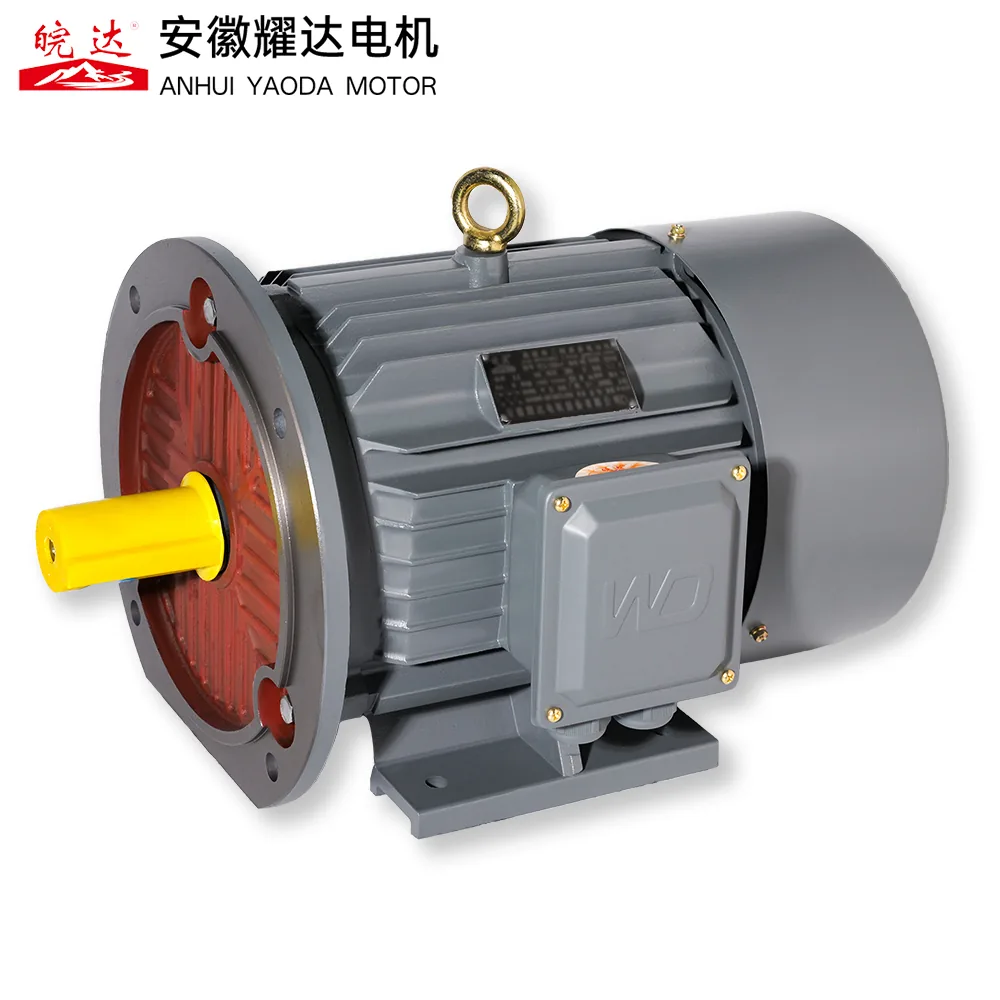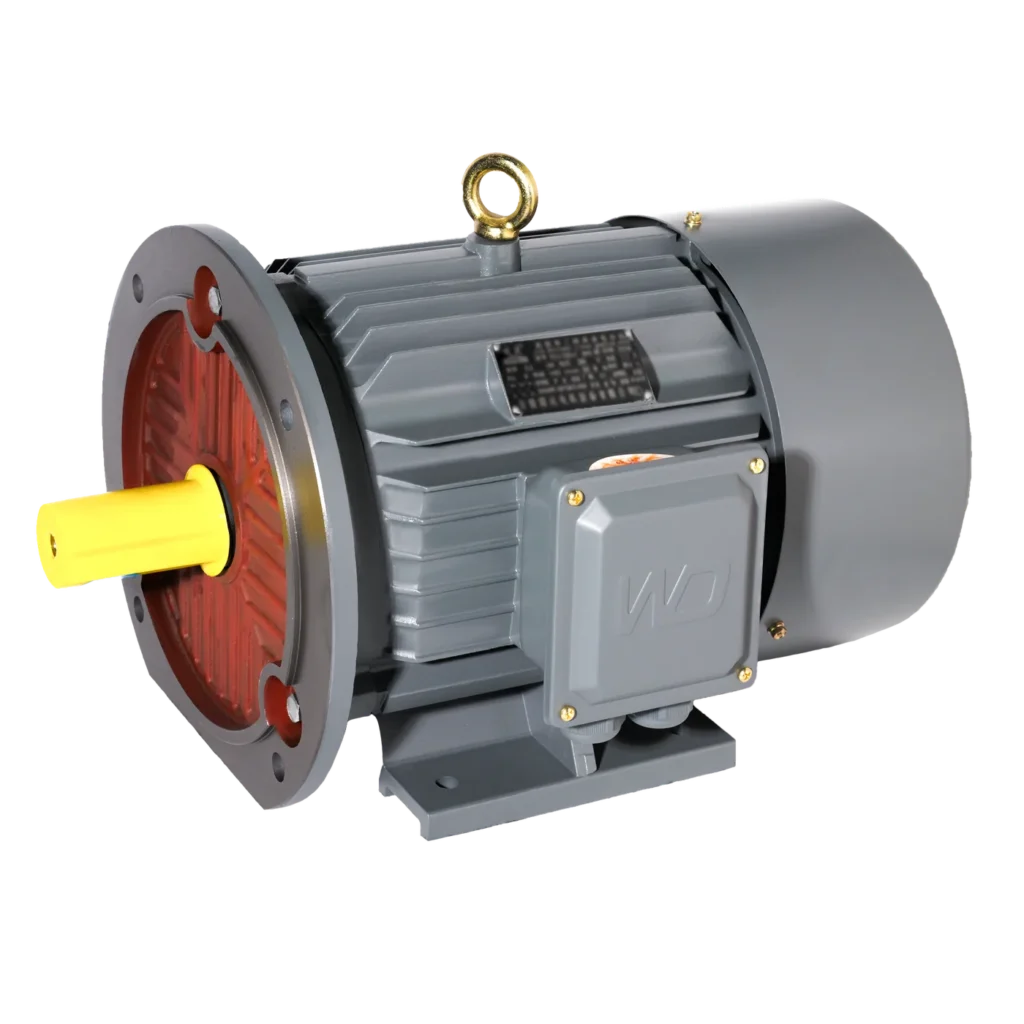




Global Supply Chains Shift as China Electric Motor Exports Rise: What Three-Phase Motor Buyers Should Check in 2026
China's electric-motor export activity showed a clear year-on-year increase in early 2026, but industrial buyers should read the data carefully. China Customs' February 2026 HS 8501 index shows a quantity index of 134.4 and a value index of 134.9, with the same month of the previous year set to 100. In other words, exports in this broad customs category were about 34.4% higher by quantity and 34.9% higher by value than in February 2025.
HS 8501 covers electric motors and generators (excluding generating sets), so this is not a three-phase induction motor-only statistic. It should be used as a market signal, not as proof that every motor type, destination market or supplier grew at the same rate. For OEMs, distributors and industrial procurement teams, the more useful question is what the shifting supply environment means for supplier qualification, energy-efficiency compliance, repeat-order consistency and delivery risk.
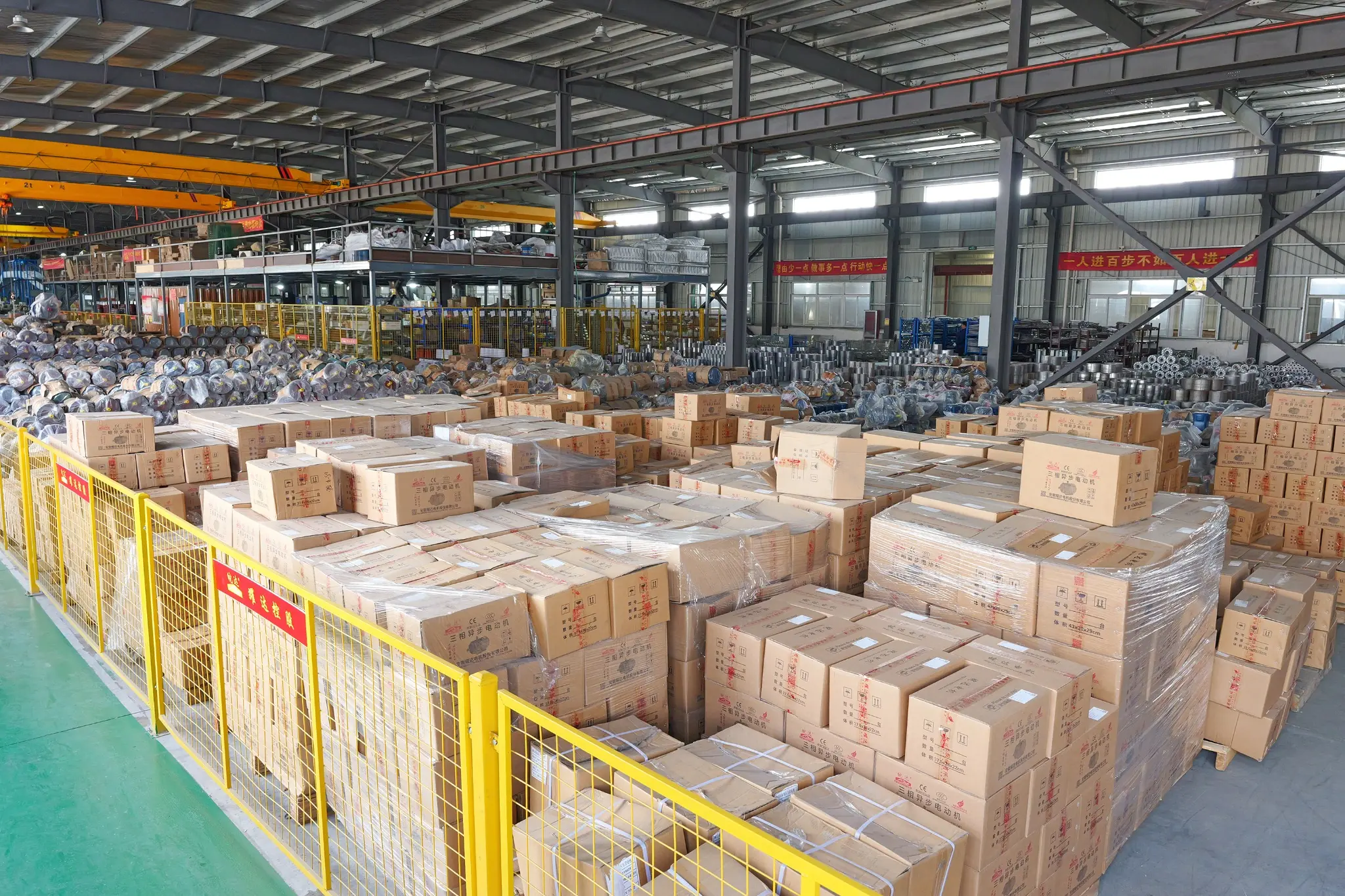
2026 Market Signals: What Is Verified and What Buyers Should Do
| Market signal | Verified fact | What it means for an industrial buyer |
|---|---|---|
| China export activity | China Customs reports February 2026 HS 8501 quantity index 134.4 and value index 134.9, versus February 2025 = 100. | China remains an active sourcing base, but HS 8501 is broader than three-phase induction motors. Qualify the exact supplier and product series rather than relying on macro data alone. |
| European Union efficiency rules | Under EU Ecodesign rules, many in-scope three-phase motors from 0.75–1,000 kW must meet at least IE3. In-scope 75–200 kW, 2-, 4- and 6-pole motors must meet IE4, subject to defined exclusions. | Do not ask only for “CE” or “IE4.” Confirm whether the exact model, pole count, power, application and documentation match the project. |
| United States requirements | DOE electric-motor standards are defined in 10 CFR 431. The current rulemaking timeline includes compliance changes from June 1, 2027 for covered motors, while certain expanded-scope motor standards have a January 1, 2029 compliance date. | Do not assume that “IE4 becomes mandatory in the U.S. in 2026.” Confirm the DOE/NEMA scope that applies to the actual motor and equipment. |
| Yaoda export documentation | Yaoda has published CE conformity documentation and a model list for a 0.75–315 kW three-phase motor range. | Request model-level documentation and make sure the quoted motor is traceable to the applicable conformity file. |
Why this matters: the original export story is not simply “China is cheaper.” Buyers are increasingly comparing technical fit, efficiency rules, documentation, production repeatability, lead time, packaging and after-sales response before changing a motor supplier.
Why Three-Phase Motor Sourcing Is Moving Beyond Unit Price
A three phase electric motor is normally integrated into a pump, fan, compressor, conveyor, machine tool or OEM system. A small unit-price saving can disappear quickly if the delivered motor has the wrong shaft, frame, mounting dimensions, rated speed, terminal-box position or efficiency documentation.
For this reason, a more resilient sourcing strategy evaluates the complete supply package. A qualified supplier should be able to turn an incomplete inquiry into an approved technical specification, manufacture the same configuration consistently across repeat orders, provide test evidence and prepare export packaging that protects the motor during sea or land transport.
Five checks that matter more than a low quotation
- Technical compatibility: power, voltage, frequency, poles, rated speed, frame size, mounting, shaft and load type.
- Market compliance: efficiency class, conformity documents, hazardous-area requirements and destination-market rules.
- Production control: machining accuracy, winding consistency, insulation process, assembly controls and final inspection.
- Repeat-order consistency: approved drawings, nameplate data, BOM control and batch-to-batch dimensional consistency.
- Delivery readiness: realistic lead time, packaging method, labeling, spare-parts planning and shipment documentation.
Europe: IE3 and IE4 Rules Make Model-Level Verification Essential
The European market is a good example of why “high efficiency motor” is too vague for procurement. The EU Ecodesign framework sets different minimum-efficiency requirements depending on motor output, pole count and motor type. The European Commission notes that in-scope three-phase motors between 0.75 kW and 1,000 kW generally require IE3, while certain 75–200 kW, 2-, 4- and 6-pole motors require IE4.
That does not mean every European project needs IE4. It means the buyer must identify the exact scope. Yaoda's product range includes the YE3 IE3 induction motor and the YE4 IE4 three phase induction motor, but efficiency class is only one part of the selection.
For a European OEM or replacement project, confirm the exact model, voltage, frequency, poles, mounting, frame, shaft dimensions, duty, IP degree and documentation. Yaoda has also published information about its CE conformity documentation for a 0.75–315 kW three-phase motor range. The practical buyer check is whether the motor being quoted is actually covered by the supporting document and whether the project needs additional requirements beyond general CE conformity.

North America: Do Not Treat IE4 as a Blanket U.S. Requirement
One important correction for international buyers is that U.S. motor efficiency regulation should not be simplified into the statement “IE4 is mandatory from January 2026.” The U.S. Department of Energy regulates covered electric motors through 10 CFR 431, with requirements expressed for defined motor classes and average full-load efficiency levels.
DOE's current electric-motor page lists amended standards with a compliance date of June 1, 2027 for covered motors under the 2023 rule. Separately, standards for certain expanded-scope electric motors have a January 1, 2029 compliance date. For North American projects, buyers should therefore confirm the applicable DOE scope, NEMA/IEC equivalence, horsepower or kW, poles, enclosure, voltage, duty and equipment use before choosing a motor.
For an IEC-focused supplier, this technical review is especially important. An IE3 or IE4 label can help describe efficiency performance, but it does not by itself prove that a motor satisfies every U.S. regulatory, dimensional or certification requirement for a specific project.
Russia/CIS, the Middle East and Southeast Asia: Site Conditions Can Be More Important Than the Efficiency Label
In many export projects, the motor's operating environment is the deciding factor. Cold-climate installations may require confirmation of low-temperature starting, bearing grease, seals, condensation protection and space heaters. Hot, dusty or humid installations may require higher enclosure protection, special coatings, improved sealing or different cooling arrangements.
Voltage and frequency also vary by project. A standard 380 V / 50 Hz configuration should not be assumed to fit a 400 V, 415 V, 440 V or 460 V system. The buyer should confirm local supply conditions before production. The same applies to hazardous areas: a standard three phase induction motor for a general industrial environment should not be substituted for an explosion-protected motor simply because the kW and speed are similar.
What a China Electric Motor Manufacturer Should Be Able to Prove
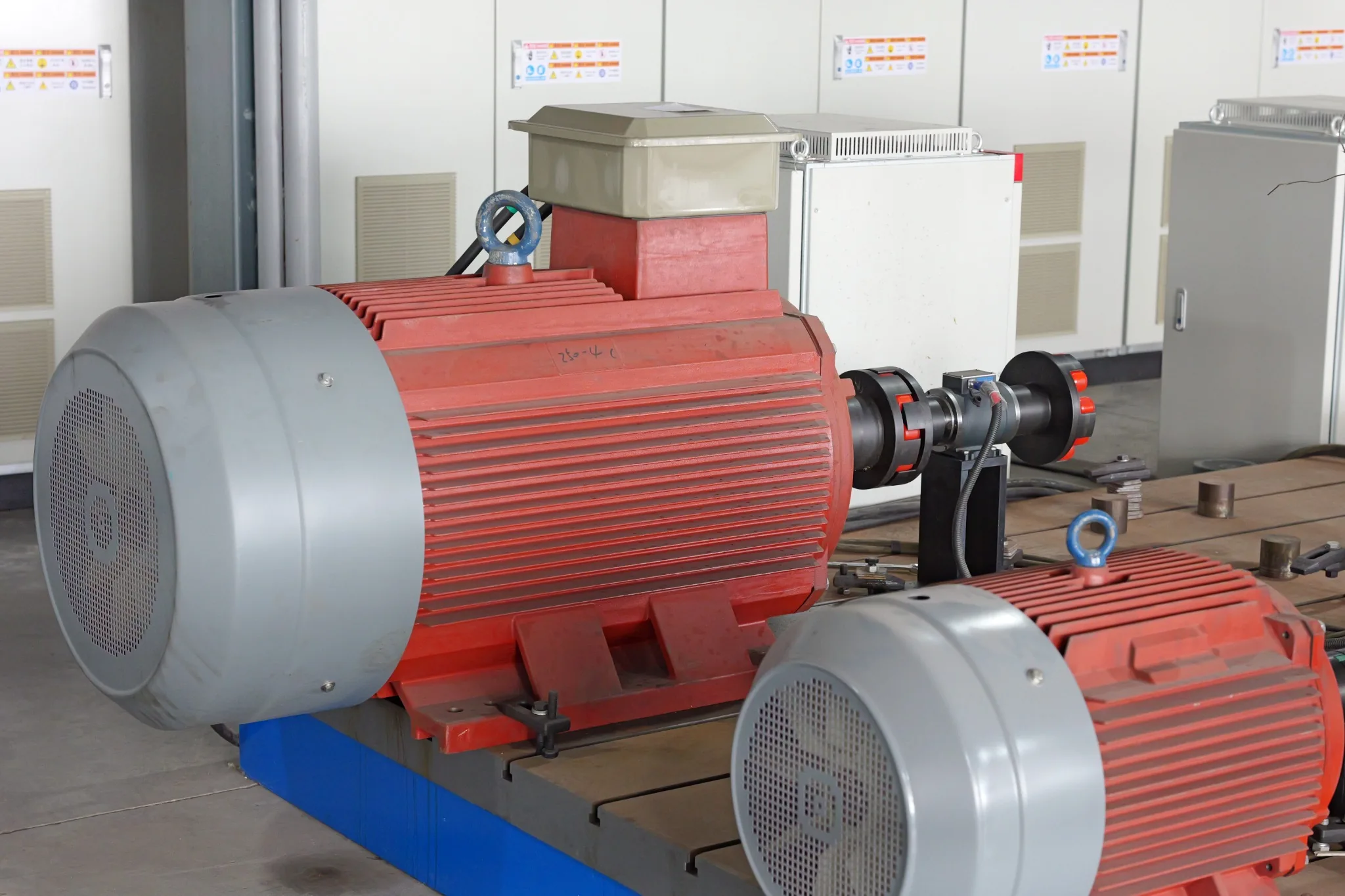
Supply-chain diversification works only when the new supplier is auditable. Yaoda's published motor manufacturing and testing process covers casing processing, CNC machining, stator winding and wire embedding, VPI insulation treatment, assembly, type testing, finished-product staging and export packaging.
The factory page states that completed motors are checked for no-load and load performance, temperature rise, vibration, noise, insulation, withstand voltage, efficiency and appearance before delivery. Those process details are more useful to an industrial buyer than a generic claim such as “high quality,” because they can be converted into inspection requirements on a purchase order.
Supplier Qualification Checklist for Export Motor Projects
| Buyer check | Evidence to request | Why it reduces supply-chain risk |
|---|---|---|
| Exact motor specification | Approved datasheet, model code and technical drawing | Prevents a quotation based on a similar but incompatible motor. |
| Installation compatibility | Frame, B3/B5/B35 mounting drawing, shaft and flange dimensions | Reduces retrofit, coupling and machine-modification risk. |
| Efficiency/compliance | Applicable efficiency data, declaration/certificate and model scope | Helps prevent market-access or customer-approval problems. |
| Production consistency | Factory process evidence, inspection plan and repeat-order controls | Important for distributors and OEMs purchasing the same motor repeatedly. |
| Pre-shipment quality | Test report, nameplate photo and inspection records | Confirms that the delivered model matches the approved specification. |
| Export delivery | Packaging method, label/marking approval and packaging photos | Reduces transport damage and receiving errors. |
| After-sales support | Warranty terms, spare-parts list and technical contact | Improves response if a motor needs troubleshooting or replacement. |
How Yaoda's Product Range Supports Different Export Requirements
Yaoda positions itself as an industrial electric motor manufacturer in China serving OEMs, distributors and industrial projects. The current site includes standard and high-efficiency three-phase asynchronous motors, aluminum-frame motors, low-voltage high-power motors, variable-frequency motors, explosion-protected motors and permanent-magnet motor options.
For a sourcing team, the value of a broad product range is not that every project should use the same series. It is that different requirements can be evaluated within one manufacturing system. A general pump project may start with YE3. A continuously operated energy-intensive system may justify evaluating YE4. A speed-control project should be reviewed against a variable-frequency series. A hazardous-area project requires the correct explosion-protection marking and documentation.
What to Send in a Three-Phase Motor RFQ
The fastest route from market research to a usable quotation is a complete RFQ. Sending only “Please quote 30 kW three-phase motor” leaves too many variables open.
| RFQ item | Example / buyer note |
|---|---|
| Rated power | 30 kW |
| Voltage / frequency | 400 V / 50 Hz |
| Poles / rated speed | 4-pole / confirm rated rpm |
| Efficiency requirement | IE3, IE4 or destination-market requirement |
| Mounting | B3, B5, B35 or drawing-based |
| Frame / shaft | Provide required frame and shaft dimensions for replacements |
| Protection / insulation | Required IP degree and insulation class |
| Starting method | DOL, soft starter or VFD |
| Driven equipment | Pump, fan, compressor, conveyor, mixer, machine tool, etc. |
| Operating environment | Indoor/outdoor, ambient temperature, altitude, dust, humidity, corrosive or hazardous area |
| Quantity / destination | Required for production, packaging, logistics and compliance review |
| Documentation | Specify drawings, test report, declaration/certificate, nameplate and inspection requirements |
Example RFQ: “Please confirm a suitable three-phase induction motor for a centrifugal pump: 30 kW, 400 V, 50 Hz, 4-pole, B3, S1 duty, IP55, IE3 minimum, 20 units for Germany. Please confirm frame size, rated speed, shaft dimensions, applicable CE documentation, production lead time and export packing.”
What the 2026 Export Trend Means for Buyers
China's stronger HS 8501 export signal is relevant because it shows continued international movement of electric motors and generators, but the data should not be turned into an unsupported claim that every three-phase motor category or every destination market is growing at the same rate. The practical opportunity for buyers is a larger and increasingly export-oriented supplier base — provided the supplier can prove technical fit, compliance, manufacturing control and delivery capability.
For Yaoda, the strongest conversion message is therefore not “Chinese motors are cheaper.” It is that an export project can be handled as a controlled technical process: select the correct motor series, confirm drawings and documents, verify factory testing, approve the nameplate and packaging, and then release production.
For a project quotation, send Yaoda your motor specification, application, quantity and destination market. For replacement projects, add the existing nameplate photo and installation drawing so the proposed motor can be checked before production.
Frequently Asked Questions
Did Chinese three-phase induction motor exports grow 34.9% in February 2026?
China Customs reported a 134.9 value index for HS 8501 in February 2026, with the same month of 2025 set to 100. That indicates roughly 34.9% year-on-year value growth for the broad HS 8501 category, which includes electric motors and generators. It is not a three-phase induction motor-only figure.
Is IE4 mandatory for every motor sold in Europe?
No. EU Ecodesign requirements depend on motor type, power and pole count, with defined exclusions. Many in-scope motors require IE3, while IE4 applies to specified 75–200 kW three-phase motors with 2, 4 or 6 poles. Check the regulation against the exact project.
Did the United States make IE4 mandatory for all three-phase motors in 2026?
No. U.S. DOE requirements are defined by covered motor classes under 10 CFR 431 and should not be reduced to a blanket IE4 statement. Buyers should check the applicable DOE standard, compliance date and motor scope.
What is the most important information when changing a motor supplier?
Start with the approved motor specification and installation dimensions. Then verify model-level compliance documents, factory test requirements, repeat-order controls, packaging and after-sales terms. A lower price is useful only when the motors are genuinely equivalent.
What should I send Yaoda for a replacement motor?
Send a clear nameplate photo, rated power, voltage, frequency, poles or speed, frame size, mounting arrangement, shaft dimensions, IP requirement, application, quantity and destination. An installation drawing is recommended where fit is critical.
Data & Regulatory References
- General Administration of Customs of China — February 2026 HS4 Export Index
- European Commission — Electric Motors Ecodesign Requirements
- EUR-Lex — Commission Regulation (EU) 2019/1781
- U.S. Department of Energy — Electric Motors Standards and Test Procedures
- U.S. DOE — Expanded-Scope Electric Motors Final Rule