





Variable Speed Electric Motors: How to Match Energy Savings, Torque and Speed Range to the Application
Variable speed electric motors are most useful when equipment does not need to run at one fixed speed all the time. In pumps, fans, HVAC systems, conveyors and process machinery, matching motor speed to actual demand can improve control and reduce unnecessary energy use. The benefit depends on the load profile, control method and motor-drive combination, so a variable-frequency motor should be selected as part of the complete driven system.
| Quick Answer |
|---|
| Use a variable-frequency motor when the application requires adjustable speed, controlled acceleration or load matching over a meaningful part of the duty cycle. The strongest energy-saving cases are usually variable-torque loads such as centrifugal pumps and fans. Constant-torque loads such as conveyors can still benefit from speed control and smoother starting, but savings must be calculated from the actual duty cycle. Confirm power, voltage, frequency range, torque region, cooling, protection and load type before specifying the motor and VFD. |
1. Start With the Load: Variable Torque or Constant Torque?
The first selection question is not “Which VFD motor should I buy?” It is “How does the driven load behave as speed changes?”
Centrifugal pumps and fans are typical variable-torque loads. U.S. Department of Energy motor-system guidance explains that, under suitable centrifugal-load conditions, power demand changes approximately with the cube of speed. That is why reducing speed can cut power demand much more than a simple one-for-one percentage.
Conveyors, mixers and some process machines are different. Their torque demand may remain relatively constant across the operating range. A variable-frequency motor can still improve production control and starting behaviour, but the energy calculation should not use pump or fan assumptions.
| Load Type | Typical Examples | Main Reason to Use Variable Speed | What to Verify |
|---|---|---|---|
| Variable torque | Centrifugal pumps, fans, HVAC | Match flow/air demand and reduce throttling losses | Duty cycle, minimum speed, system curve |
| Constant torque | Conveyors, mixers, production lines | Adjustable production speed and controlled acceleration | Torque across speed range, cooling, gearbox |
| High starting demand | Loaded conveyors, heavy process equipment | Controlled acceleration | Starting torque, acceleration time, drive sizing |
| Hazardous-area load | Chemical, petroleum, dusty process areas | Speed control plus required explosion protection | Ex marking, area classification, VFD compatibility |
2. Do Not Use a Fixed Energy-Saving Percentage
A fixed “30% saving” should not be treated as a general promise. Actual savings depend on equipment type, speed profile, current control method, operating hours and system losses.
A fan that runs at full speed against a heavily closed damper may offer a strong VFD opportunity. A conveyor that already operates close to its required fixed speed may not. For procurement, ask for the expected operating points: how long the equipment runs at full, medium and low demand, the minimum required speed, and whether output is currently controlled by throttling, bypassing, mechanical transmission or on/off cycling.
3. What Buyers Can Verify on Yaoda YVF2
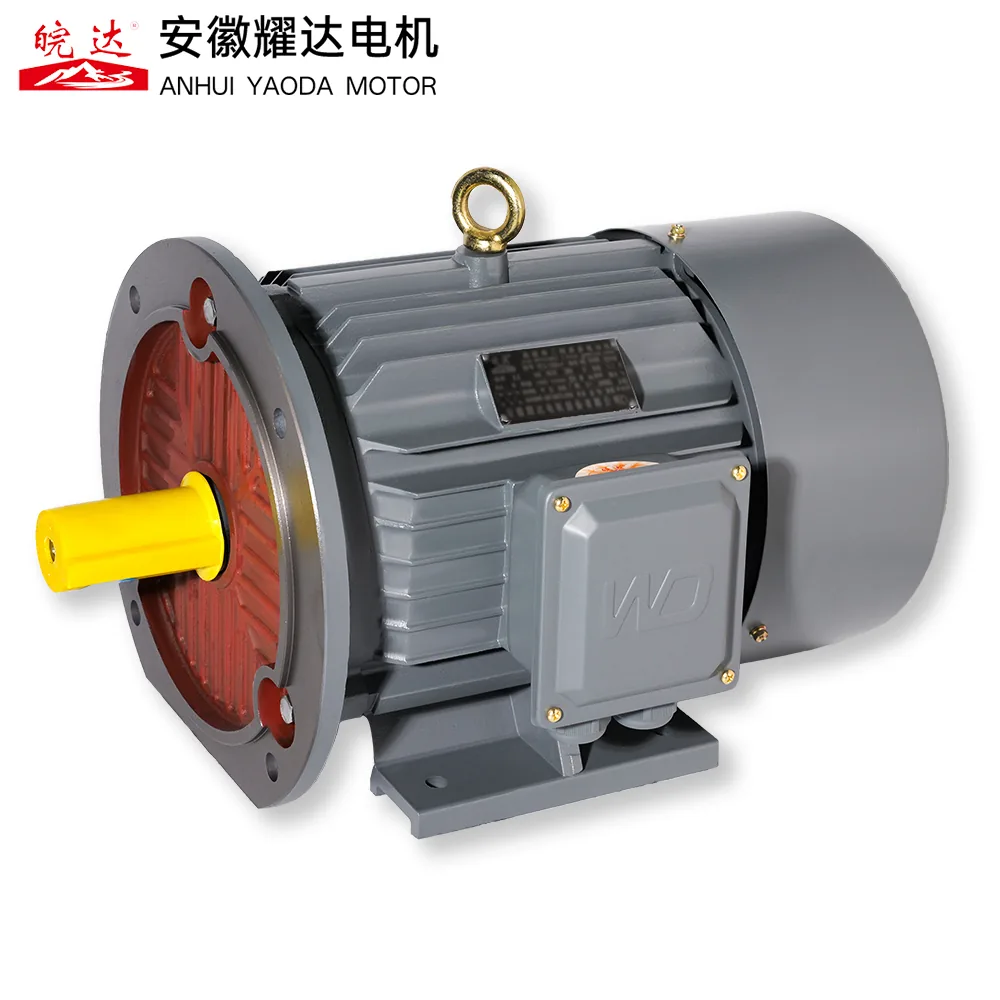
Yaoda’s YVF2 variable-frequency speed-control motor is a three-phase induction motor for industrial duties requiring controlled speed. The published performance table lists H200–355 models rated 18.5–315 kW, with a 3–50 Hz constant-torque region and model-dependent constant-power regions of 50–60, 50–75 or 50–100 Hz. Other frame sizes, ratings and operating ranges require model-specific confirmation. The published product information also lists 380 V or customized voltage, Class F insulation and IP54/IP55 protection options.
| Item | YVF2 Current Product Information |
|---|---|
| Series | YVF2 variable-frequency speed-control three-phase induction motor |
| Frame size | H80–355 |
| Output | 0.55–375 kW |
| Voltage | 380 V or customized |
| Duty | S1 |
| Insulation | Class F |
| Protection | IP54 / IP55 |
| Overall frequency specification | 5–100 Hz |
| Mounting | Foot or flange |
| Starting method | Variable-frequency starting |

These values define the product platform, but torque and usable frequency regions remain model-dependent. Confirm the exact motor type and operating range rather than relying only on the headline frequency range.
4. Frequency Range Is Not the Same as Usable Torque Range
An RFQ that says only “5–100 Hz” is incomplete. The motor may operate in a constant-torque region over one part of the range and a constant-power region over another. Low-speed continuous duty also requires attention to cooling because cooling performance can change as motor speed falls.
- What is the minimum continuous operating frequency?
- What torque is required at minimum speed?
- How long will the motor run below base frequency?
- Is constant torque required at low speed?
- What is the maximum operating frequency?
- Is continuous operation above base speed required?
- What cooling arrangement is used for the selected model?
5. Where Variable-Frequency Motors Create the Most Value
For pumps and fans, variable speed can match flow or airflow to demand instead of dissipating energy through throttling. For conveyors and production lines, the value may be adjustable line speed, controlled acceleration and coordination with other equipment.
| Application | Buyer Objective | Selection Priority |
|---|---|---|
| Pump | Match flow to demand | Variable-torque duty, minimum speed, system curve |
| Fan / HVAC | Match airflow and pressure | Duty cycle, low-speed operation, control feedback |
| Conveyor | Adjust line speed smoothly | Constant torque, acceleration, gearbox ratio |
| Process line | Coordinate production speed | Speed range, torque response, control integration |
| General machinery | Multiple operating recipes | Load at each required speed |
6. Controlled Starting Helps, but Drive Settings Still Matter
Variable-frequency starting can reduce abrupt mechanical and electrical stress because voltage and frequency are controlled during acceleration. However, a universal starting-current ratio should not be promised without motor, drive, ramp and load data.
A lightly loaded fan may tolerate a long acceleration ramp, while a loaded conveyor may require much higher starting torque. If the project involves frequent starts, fast acceleration, braking, reversing or high inertia, include those conditions in the RFQ because they can affect drive sizing and thermal loading.
7. Standard and Explosion-Proof Variable-Frequency Motors Are Not Interchangeable
A standard variable-frequency motor should not be installed in a hazardous area simply because power and mounting dimensions are suitable.
Yaoda also offers the YBVF2 explosion-proof variable-frequency motor series for applications requiring hazardous-area protection. Selection must be based on the actual area classification and certified explosion-protection marking. This distinction is especially important in chemical, petroleum, mining and dusty process applications.

8. What to Put in a Variable-Frequency Motor RFQ
| RFQ Item | What to Provide |
|---|---|
| Rated output | Required kW |
| Supply | Voltage and frequency |
| Speed requirement | Minimum, normal and maximum speed |
| Load type | Pump, fan, conveyor, compressor, mixer, machine, etc. |
| Torque profile | Variable torque, constant torque or special starting demand |
| Operating time | Continuous/intermittent and hours at different speeds |
| Starting / stopping | Ramp time, starts per hour, braking or reversing |
| Environment | Ambient temperature, altitude, dust, moisture, hazardous area |
| Protection | Required IP / Ex requirements |
| Mounting | Foot, flange and frame requirements |
| Mechanical interface | Shaft, coupling and gearbox data |
| Control | VFD model if already selected; feedback/closed-loop requirement |
| Quantity / market | Order quantity and destination country |
For replacement projects, also provide a clear nameplate photo, dimensional drawing and any available operating-current or speed records. These details reduce the risk of selecting a motor that matches the old kW rating but not the real duty.
9. YVF2 or YVF3?
For variable-frequency applications across the H80–355 platform, YVF2 is the relevant Yaoda series. For larger low-voltage, high-power variable-frequency duties, Yaoda’s YVF3 high-power variable-frequency motor series extends the range into higher-power industrial applications.
The choice should be based on required power, frame, voltage, speed range and duty rather than the series name alone. If the application is near a platform boundary, provide the complete operating requirement so the motor and drive can be checked together.
FAQ
Do variable speed electric motors always save energy?
No. Savings depend on the load profile and existing control method. Variable-torque pumps and fans often offer stronger opportunities than equipment already operating efficiently at one fixed speed.
Is a variable-frequency motor the same as a VFD?
No. The motor is the electromechanical machine; the VFD is the electronic drive that controls supply frequency and voltage. They must be selected as a compatible system.
Can I run a standard three-phase induction motor from a VFD?
Suitability depends on insulation, cooling, speed range, drive conditions and duty. For a new project, using a motor intended for variable-frequency operation reduces uncertainty.
What information matters most for low-speed operation?
Minimum continuous speed, required torque at that speed, operating duration and cooling arrangement are critical. A wide frequency range alone is not enough.
When do I need an explosion-proof variable-frequency motor?
When the installation is in a classified hazardous area requiring explosion protection. Confirm the area classification and required Ex marking before selection.
Practical Selection Rule
Do not select a variable-frequency motor only because “VFDs save energy.” Select it because the application has a defined need for variable speed, controlled acceleration, load matching or process flexibility.
For pumps and fans, quantify the duty cycle and system curve. For conveyors and machinery, define torque across the speed range. For hazardous areas, establish the protection requirement first. Then match motor series, power, voltage, frequency range, cooling and VFD to the real operating condition.
For a Yaoda variable-frequency motor project, send the required power, voltage, minimum and maximum speed, load type, torque requirement, mounting, environment and quantity for model confirmation.